
Veterinary Feline Spay Instrument Set: Complete Buyer’s Guide (2026)
August 7, 2026 2026-08-07 8:34Veterinary Feline Spay Instrument Set: Complete Buyer’s Guide (2026)
 hasni
hasni 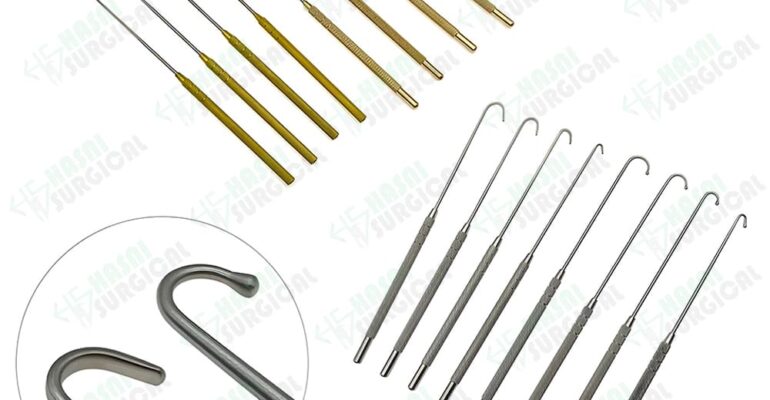
Veterinary Feline Spay Instrument Set: Complete Buyer’s Guide (2026)

What Is a Feline Spay and Why Instrument Choice Matters
A feline spay — clinically known as an ovariohysterectomy — is the surgical removal of a cat’s ovaries and uterus, one of the most commonly performed procedures in small animal veterinary practice. Because feline anatomy is considerably smaller and more delicate than canine anatomy, a dedicated feline spay instrument set matters: oversized instruments designed for dogs or general surgery can make an already delicate procedure slower and more traumatic than it needs to be. This guide walks through what belongs in a proper feline spay set, why each instrument is there, and what to check before buying one for your clinic in 2026.
What’s Typically Included in a Feline Spay Instrument Set
Commercial feline spay packs are commonly built around an 18-piece configuration, combining general soft-tissue handling instruments with a couple of feline/spay-specific tools. A typical set includes:
- Scalpel handle (with blades): For the initial skin incision, typically paired with #10 or #15 blades sized for a small abdominal incision.
- Mayo scissors, curved: Used for heavier tissue cutting during the approach to the abdominal cavity.
- Metzenbaum scissors: Fine, blunt-tipped scissors for delicate soft-tissue dissection around the ovarian pedicles and uterine horns.
- Needle holder (Olsen-Hegar or similar combined needle holder/scissor): For suturing during closure, with the combined design saving an instrument exchange during a fast-paced spay.
- Mosquito hemostats (straight and curved): Fine hemostatic forceps for clamping small vessels — our guide to how hemostats work covers this instrument category in more depth.
- Kelly hemostats (straight and curved): Slightly heavier-duty clamps for the ovarian pedicles and uterine vessels themselves.
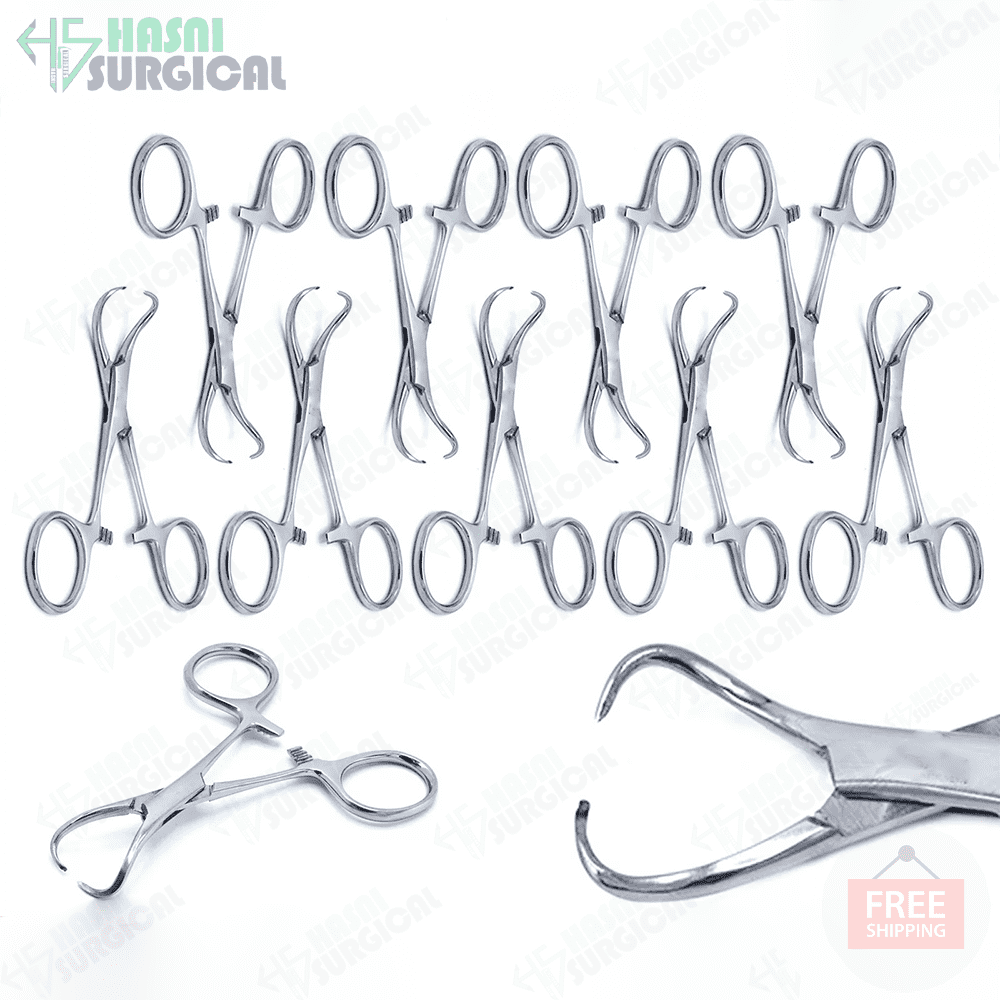
- Backhaus towel clamps: Secure surgical drapes in place around the incision site.
- Adson tissue forceps: Fine toothed forceps for handling delicate tissue edges with minimal trauma.
- Allis tissue forceps: Broader-toothed grasping forceps, useful for holding heavier tissue securely without excessive crushing.
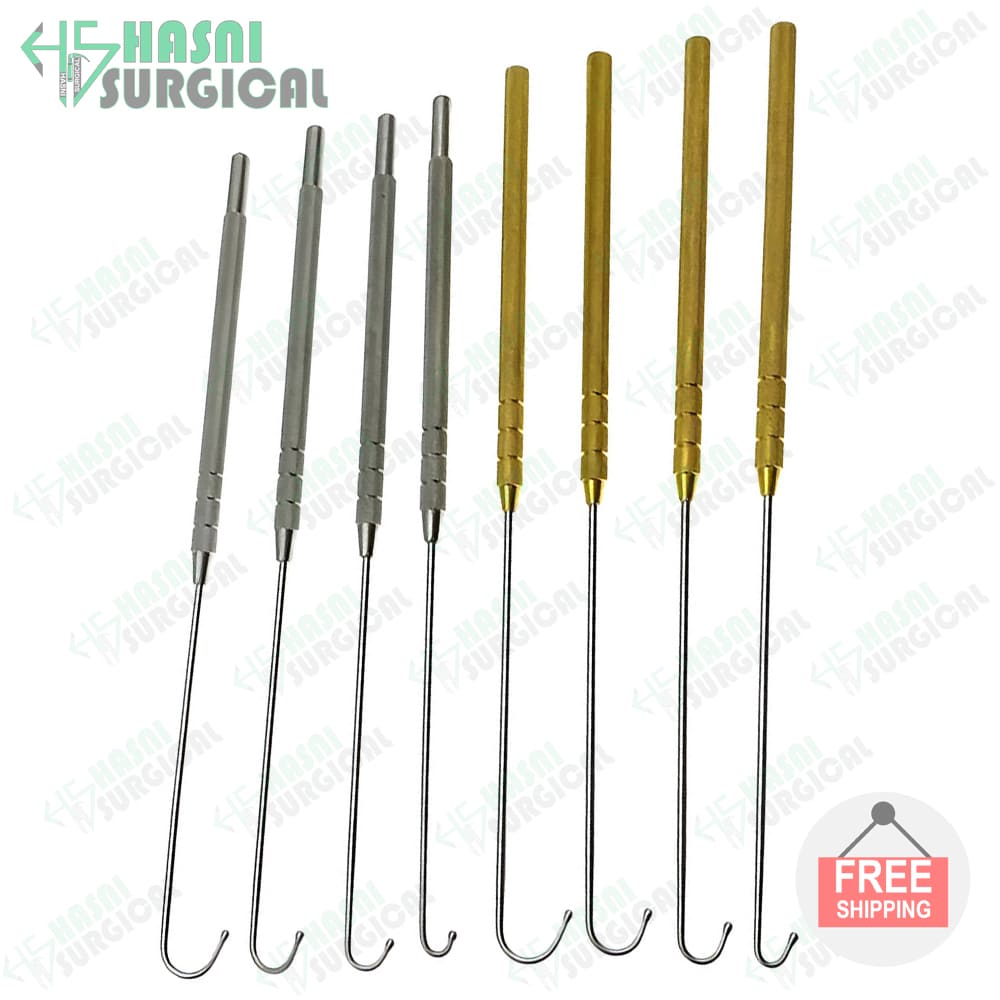
- Snook spay hook: A curved, blunt-tipped hook specifically designed to retrieve the uterine horn through a small incision — one of the few genuinely procedure-specific instruments in the set, and one of the clearest markers of a purpose-built spay pack rather than a generic soft-tissue tray.
Why the Snook Hook Matters
The Snook spay hook deserves particular attention because it’s the instrument most specific to this procedure. Its curved, blunt tip is designed to be passed through a small ventral midline incision to locate and retrieve a uterine horn without the need for a larger incision or more aggressive tissue handling — directly supporting the smaller, more precise approach that feline anatomy calls for. A quality spay hook typically measures around 8 inches (20cm) overall, made from surgical-grade stainless steel for autoclave durability, with a flat, secure grip handle for controlled retrieval.
Instrument Sizing: Why Feline-Specific Matters
Feline spay sets are generally built with shorter, finer instruments than their canine equivalents, matched to the smaller incision and more delicate tissue planes involved in cat surgery. Using oversized canine or general-surgery instruments on a feline patient isn’t unsafe outright, but it typically means less precise tissue handling, a larger incision than necessary, and a longer procedure time — all factors that matter in high-volume spay/neuter programs where efficient, low-trauma technique directly affects patient recovery and clinic throughput.
Suture and Closure Considerations
While not part of the reusable instrument tray itself, suture selection is closely tied to spay instrumentation. Veterinary literature on spay-neuter instrumentation notes that commonly used sutures for these procedures include synthetic monofilament absorbables such as poliglecaprone 25 and polydioxanone, and synthetic braided absorbables such as polyglactin 910 — material choices that pair with a needle holder sized appropriately for feline tissue.
High-Volume Spay/Neuter Programs
Clinics running high-volume spay/neuter programs have particular reasons to standardize on a dedicated feline set: consistent instrument sizing across a full day of back-to-back procedures reduces surgeon fatigue and supports faster turnover between cases, while durable, fully autoclavable stainless steel construction keeps the set in rotation through repeated same-day sterilization cycles without needing multiple duplicate trays.
What to Look for When Buying a Feline Spay Set
- Material: Surgical-grade stainless steel construction rated for repeated autoclave sterilization; tungsten carbide (TC) inserts on needle holders and scissors offer extended durability for high-volume use.
- Completeness: Confirm the set includes both the general soft-tissue instruments (scissors, forceps, hemostats, needle holder) and the feline-specific Snook hook, rather than assembling one piecemeal.
- Sizing: Instruments sized for feline anatomy specifically, not a scaled-down canine set — length and jaw size should suit a smaller abdominal incision.
- Sterilization compatibility: Confirm autoclave validation and, ideally, a dedicated sterilization case or tray for organized storage between uses. Our guide to how surgical instruments are sterilized covers autoclave standards relevant to veterinary instrument reprocessing.
- Certification: ISO 13485 and CE certification remain relevant quality markers even for veterinary (non-human) surgical instruments manufactured to the same stainless steel and finishing standards as human surgical tools.
Hasni Surgical manufactures veterinary surgical instruments — including feline and canine spay/neuter instrumentation — from its Sialkot, Pakistan facility. Browse the full Veterinary Instrument Kits range on our online shop, or reach the team by phone at +92 308 5391894, by email at info@hasnisurgical.com, or through our contact us page. Visit us at www.hasnisurgical.com.
Related Reading
For more on individual instrument categories used across this and other general surgery sets, see our guides on how hemostats work and surgical forceps types and uses, both directly relevant to feline spay instrumentation.
Frequently Asked Questions
Q1: What instruments are included in a typical feline spay set?
A typical 18-piece set includes a scalpel handle with blades, Mayo and Metzenbaum scissors, a needle holder, mosquito and Kelly hemostats, Backhaus towel clamps, Adson and Allis tissue forceps, and a Snook spay hook for retrieving the uterine horn.
Q2: What does a Snook spay hook do?
It’s a curved, blunt-tipped instrument used to locate and retrieve the uterine horn through a small abdominal incision during a spay, allowing a smaller, less traumatic incision than would otherwise be needed.
Q3: Why use a feline-specific spay set instead of general surgery instruments?
Feline-specific instruments are sized shorter and finer to match smaller anatomy and incisions, supporting more precise tissue handling, a smaller incision, and typically a faster procedure than using oversized canine or general-surgery instruments.
Q4: What material should a feline spay instrument set be made from?
Surgical-grade stainless steel is standard for reusable veterinary instruments, with tungsten carbide (TC) inserts on needle holders and scissors offering added durability for clinics running high procedure volumes.
Q5: How should a feline spay instrument set be sterilized between procedures?
Reusable stainless steel feline spay instruments should be cleaned and autoclaved according to a validated sterilization cycle between each use, with a dedicated sterilization case helping keep the set organized for high-volume, same-day turnover.
Conclusion
A dedicated feline spay instrument set combines familiar general soft-tissue instruments — scissors, forceps, hemostats, a needle holder — with the one genuinely procedure-specific tool, the Snook spay hook, sized appropriately for feline anatomy throughout. For clinics performing routine ovariohysterectomies or running high-volume spay/neuter programs, standardizing on a properly sized, fully autoclavable feline-specific set supports faster, lower-trauma procedures and more consistent outcomes across a busy surgical schedule.
