
How Are Surgical Instruments Sterilized? Complete Guide to Methods, Standards & Best Practices
August 6, 2026 2026-08-06 6:37How Are Surgical Instruments Sterilized? Complete Guide to Methods, Standards & Best Practices
 hasni
hasni 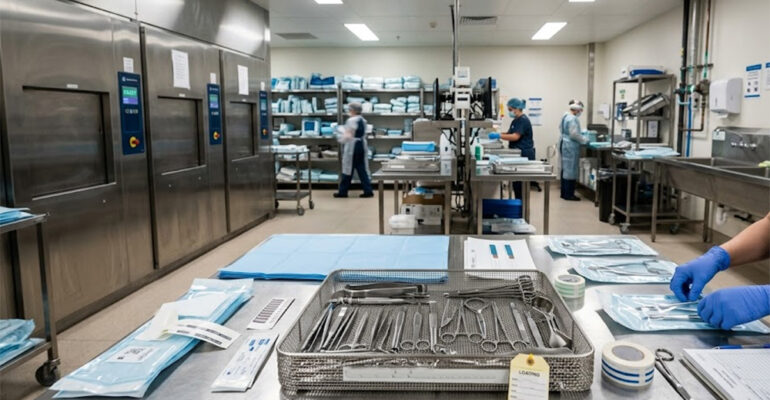
How Are Surgical Instruments Sterilized? Complete Guide to Methods, Standards & Best Practices
Introduction: Why Sterilization Is the Backbone of Patient Safety
Every surgical instrument — no matter how precisely manufactured — is only as safe as its last sterilization cycle. Surgical instrument sterilization is the process that eliminates all forms of microbial life, including bacterial spores, from an instrument’s surface before it ever touches a patient. Get it wrong, and even the finest German-grade stainless steel surgical instrument becomes a vector for infection.
For hospital sterile processing departments (SPDs), OR managers, and surgical instrument distributors, understanding the full sterilization workflow — not just the machine involved, but the cleaning, packaging, monitoring, and storage steps around it — is essential to preventing hospital-acquired infections (HAIs) and instrument damage.
This guide is brought to you by Hasni Surgical, a leading manufacturer and exporter of premium surgical, dental, orthopedic, and veterinary instruments from Sialkot, Pakistan. Browse our full range at our online shop, or contact us for wholesale and OEM enquiries.
Sterilization vs. Disinfection: Understanding the Difference
These two terms are often confused, but they are not interchangeable:
- Disinfection reduces the number of viable microorganisms on a surface but does not necessarily kill bacterial spores. It is used for semi-critical items that contact mucous membranes.
- Sterilization destroys all microbial life, including the most resistant bacterial spores. It is mandatory for any critical instrument that penetrates skin, tissue, or the bloodstream — which describes virtually every surgical instrument in an operating room.
The CDC Guidelines for Disinfection and Sterilization classify all reusable medical devices into critical, semi-critical, and non-critical categories, each with a mandated minimum level of reprocessing.
The Complete Sterile Processing Workflow

Sterilization is not a single step — it is the final stage of a five-stage workflow. Skipping or rushing any stage compromises the entire process.
Stage 1 — Point-of-Use Treatment
Immediately after surgery, instruments should be wiped free of gross soil and kept moist (using an enzymatic foam or damp towel) to prevent blood and tissue from drying onto the surface, which makes later cleaning far more difficult.
Stage 2 — Cleaning and Decontamination
- Disassemble all multi-part instruments and open every ratchet and box lock fully
- Soak and manually brush instruments using enzymatic detergent
- Run instruments through an ultrasonic cleaner for 10–15 minutes to dislodge debris from crevices and serrations
- Rinse thoroughly with deionized or distilled water — tap water leaves mineral spots that can affect sterilant penetration
Stage 3 — Inspection and Function Testing
Every instrument is inspected under magnification for residual soil, corrosion, or damage. Hinged instruments like forceps and needle holders are function-tested for box lock tightness and tip alignment. Damaged instruments are pulled from service before they ever reach the sterilizer.
Stage 4 — Packaging
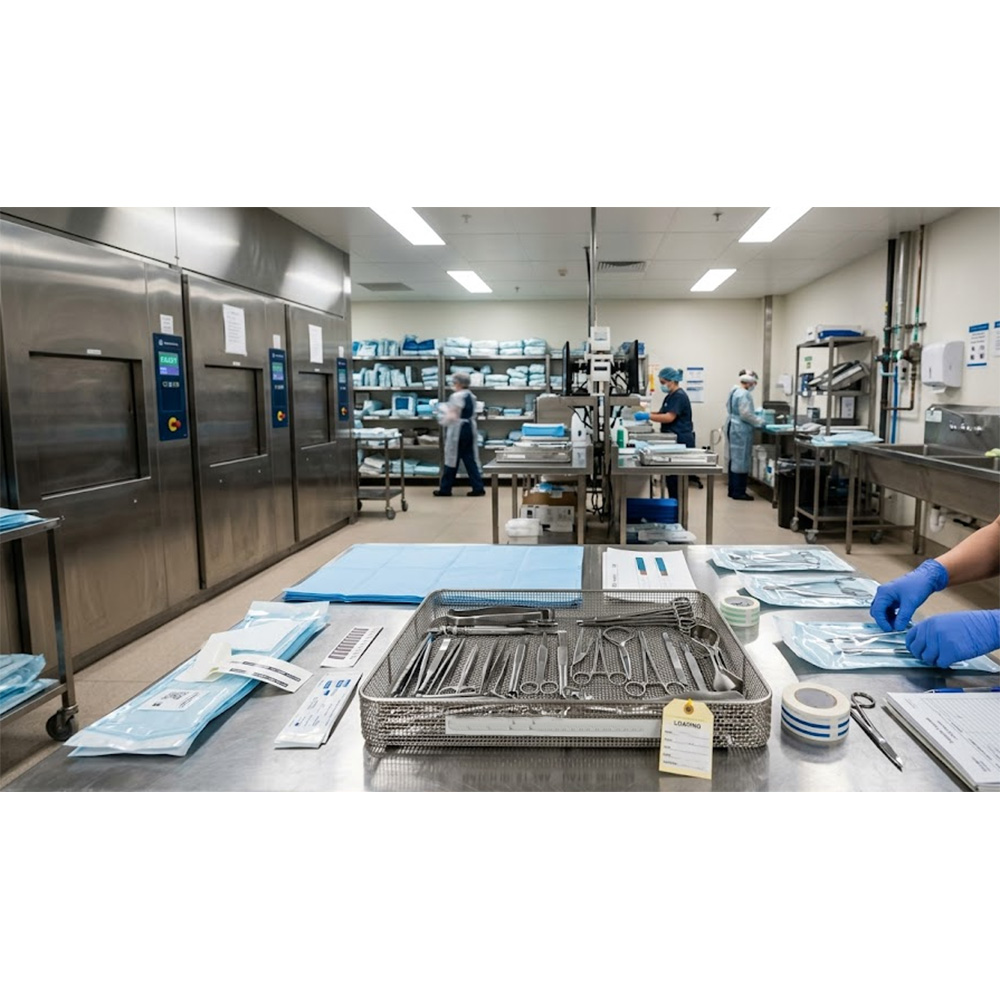
Instruments are arranged in trays or wrapped in sterilization pouches, wrap, or rigid containers that allow sterilant penetration while maintaining a sterile barrier until the package is opened. Chemical indicator strips are placed inside each package to confirm the sterilant reached the load.
Stage 5 — Sterilization and Storage
The package is run through the chosen sterilization method (covered in detail below), then cooled, labeled with a load number and expiration, and stored in a clean, dry area.
Main Surgical Instrument Sterilization Methods

1. Steam Autoclave (Moist Heat Sterilization)
The most widely used, cost-effective, and environmentally friendly method for stainless steel and titanium instruments. Saturated steam under pressure destroys microorganisms through protein coagulation.
- Gravity displacement cycle: 121°C for 15–30 minutes
- Pre-vacuum (dynamic-air-removal) cycle: 132–134°C for 3–4 minutes — faster and better for hollow or porous instruments
Per the ISO 17665 standard, steam sterilization parameters must be validated and routinely monitored using biological, chemical, and physical indicators to confirm sterility assurance.
2. Dry Heat Sterilization
Uses hot air (160–180°C for 1–2 hours) instead of steam. Suitable for instruments that could corrode or be damaged by moisture, such as certain powders, oils, and some sharp cutting edges. It requires longer cycle times and higher temperatures than steam, making it less commonly used for routine surgical trays.
3. Ethylene Oxide (EtO) Gas Sterilization
A low-temperature gas sterilant ideal for heat- and moisture-sensitive instruments — including complex laparoscopic instruments, cameras, and instruments with electronic or plastic components. EtO penetrates packaging and lumens effectively but requires a lengthy aeration period afterward to remove toxic residue, making it slower than steam.
4. Hydrogen Peroxide Gas Plasma (e.g., STERRAD)
A fast, low-temperature method well suited to titanium instruments, rigid endoscopes, and other moisture-sensitive devices that cannot tolerate steam. It leaves no toxic residue and has a shorter cycle time than EtO, though it cannot process linens, liquids, or narrow-lumen devices below certain diameters.
5. Chemical (Cold) Sterilization — Glutaraldehyde / OPA
Liquid chemical sterilants used as a last resort for heat-sensitive instruments that cannot be autoclaved. This method requires precise immersion times, thorough rinsing to remove toxic residue, and does not provide packaged, storable sterility — instruments must be used shortly after processing.
6. Radiation Sterilization (Gamma / E-beam)
Used primarily by manufacturers for single-use, disposable instruments and pre-packaged sterile devices before they ever reach the hospital — not typically performed on-site. Hasni Surgical uses validated industrial sterilization partners for any single-use product lines.
Sterilization Monitoring: How Facilities Confirm It Worked
A sterilizer running correctly is not enough — every load must be verified using three types of indicators:
- Physical monitors: Time, temperature, and pressure gauges/printouts on the sterilizer itself
- Chemical indicators: Heat- or gas-sensitive strips placed inside each package that change color when exposure conditions are met
- Biological indicators: Vials containing highly resistant bacterial spores (e.g., Geobacillus stearothermophilus for steam) run weekly and with every implant load — the only monitor that directly confirms microbial kill
The FDA’s reprocessing guidance requires manufacturers to validate and publish specific reprocessing instructions for every reusable surgical instrument they sell.
Choosing the Right Sterilization Method by Instrument Type

| Instrument Type | Recommended Method |
|---|---|
| Stainless steel forceps, clamps, scissors | Steam autoclave (gravity or pre-vacuum) |
| Titanium instruments | Steam autoclave or Hydrogen Peroxide Plasma |
| Rigid laparoscopic/endoscopic instruments | Hydrogen Peroxide Plasma or EtO |
| Heat-sensitive plastic components | EtO gas or cold chemical sterilization |
| Orthopedic implants | Steam autoclave with biological indicator every cycle |
For detailed sterilization notes specific to each instrument family, see our related guides: Surgical Forceps: Complete Guide, Titanium Surgical Scissors Guide, and Bone Implant Instruments Guide.
Common Sterilization Mistakes That Compromise Patient Safety
- Overloading the sterilizer — blocks steam or gas penetration to instruments in the center of the load
- Leaving ratchets and box locks closed — traps air pockets that prevent sterilant contact with hinge surfaces
- Using tap water for rinsing — leaves mineral deposits that shield microorganisms and stain instruments
- Skipping biological indicator testing — the only monitor that confirms actual microbial kill, not just cycle parameters
- Storing wrapped trays in high-humidity areas — compromises the sterile barrier over time, even without visible damage
International Standards Governing Instrument Sterilization
Hospitals, manufacturers, and distributors sourcing or reprocessing surgical instruments internationally should be familiar with:
- ISO 17665: Moist heat sterilization of healthcare products
- AAMI ST79: Comprehensive guide for steam sterilization and sterility assurance in healthcare facilities
- CDC Guidelines for Disinfection and Sterilization: US healthcare facility reprocessing standards
- WHO Surgical Safety Guidelines: Global recommendations on instrument traceability and sterile technique
Every surgical instrument that Hasni Surgical manufactures is produced to be fully compatible with steam autoclaving and, where applicable, EtO and hydrogen peroxide plasma sterilization — with material grades and finishes selected specifically to withstand repeated reprocessing cycles without corrosion or degradation. Learn more about us and our manufacturing standards.
Frequently Asked Questions About Surgical Instrument Sterilization
What is the most common method used to sterilize surgical instruments?
Steam autoclaving is the most widely used method worldwide. It is effective, fast, low-cost, and safe for the vast majority of stainless steel and titanium surgical instruments, including forceps, scissors, and retractors.
How long does a standard steam sterilization cycle take?
A gravity displacement cycle typically runs at 121°C for 15–30 minutes, while a pre-vacuum cycle runs at 132–134°C for only 3–4 minutes. Total processing time including drying is usually 30–60 minutes depending on the sterilizer and load size.
Can all surgical instruments be steam sterilized?
No. Heat- and moisture-sensitive instruments — such as certain electronic components, cameras, and some plastic parts — cannot tolerate steam and require low-temperature methods like Ethylene Oxide gas or Hydrogen Peroxide Gas Plasma instead.
What is a biological indicator and why is it important?
A biological indicator is a small vial containing highly resistant bacterial spores that is run through the sterilizer alongside a regular load. It is the only monitoring method that directly confirms microorganisms were actually killed, rather than just verifying that the correct time, temperature, or pressure was reached.
Why should ratchets and box locks be opened before sterilization?
Closed ratchets on instruments like hemostatic forceps trap air pockets between the jaws, preventing steam or gas from reaching those surfaces. Leaving instruments open during sterilization ensures full sterilant penetration and effective sterility.
What is the shelf life of a sterilized, wrapped instrument tray?
Shelf life is generally event-related rather than strictly time-based — a properly wrapped and sealed tray remains sterile as long as the packaging integrity is intact, it stays dry, and it hasn’t been compromised by handling or storage conditions. Most facilities still assign a standard expiration label (commonly 6 months) as an added safeguard.
Does sterilization damage or shorten the life of surgical instruments?
Proper steam sterilization, when combined with correct pre-cleaning and rinsing with deionized water, does not meaningfully shorten instrument life. Premature wear is usually caused by incomplete cleaning, tap-water mineral deposits, or improper drying — not the sterilization process itself.
What is the difference between EtO and Hydrogen Peroxide Plasma sterilization?
Both are low-temperature methods for heat-sensitive instruments, but EtO gas has a longer cycle time due to a mandatory aeration period to remove toxic residue, while Hydrogen Peroxide Plasma is faster and leaves no toxic residue — though it cannot process certain narrow-lumen devices or liquids that EtO can handle.
Are Hasni Surgical instruments compatible with all sterilization methods?
Hasni Surgical instruments are manufactured from corrosion-resistant, medical-grade stainless steel and titanium designed for repeated steam autoclave cycles, and are also compatible with EtO and Hydrogen Peroxide Plasma sterilization where applicable. Contact us for specific reprocessing guidance on any product.
Who sets the sterilization standards hospitals must follow?
Standards bodies including ISO (ISO 17665), AAMI (ST79), the CDC, and the WHO publish the sterilization guidelines that hospitals, sterile processing departments, and manufacturers are expected to follow, covering everything from cycle parameters to monitoring and traceability.
Conclusion: Sterilization Is Non-Negotiable
Surgical instrument sterilization is not a single machine cycle — it is a complete chain of cleaning, inspection, packaging, sterilization, monitoring, and storage, and every link in that chain matters. A perfectly manufactured instrument reprocessed incorrectly is just as dangerous as a poorly made one.
Hasni Surgical manufactures premium, ISO-certified surgical instruments from Sialkot, Pakistan that are built to withstand thousands of sterilization cycles without compromising precision or patient safety. Whether you need a single specialty set or a bulk hospital order, our team can guide you on the right materials and reprocessing compatibility for your facility.
📩 Ready to order or get a custom quote? Contact us today or browse our full catalogue at our shop. Learn more about Hasni Surgical and our commitment to quality. Our team responds within 24 hours.
