
Top Benefits of Using Dressing Scissors in Clinics & Hospitals
July 8, 2026 2026-07-08 5:32Top Benefits of Using Dressing Scissors in Clinics & Hospitals
 hasni
hasni 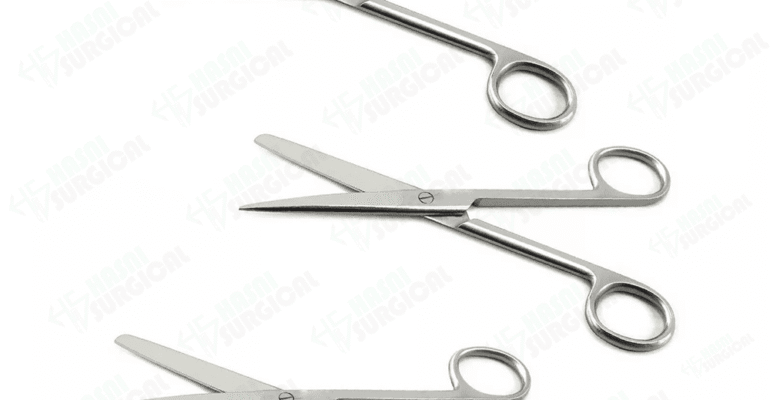
Top Benefits of Using Dressing Scissors in Clinics & Hospitals

Introduction: A Simple Instrument With an Outsized Role
Dressing scissors rarely get the spotlight the way scalpels or forceps do, yet almost no shift in a hospital, clinic, or wound care unit passes without one being picked up. Their job looks simple — cutting bandages, gauze, tape, and dressings — but the design behind that simplicity is what protects patients from accidental cuts and keeps wound care efficient. Distinguished by one sharp blade and one rounded, blunt-tipped blade, a dressing scissor is built to slide safely under a bandage against the skin without nicking the tissue beneath.
This guide breaks down the real, practical benefits of using dressing scissors in clinical and hospital settings, where they’re used, how to choose the right pair, and how to keep them in service for years. It’s brought to you by Hasni Surgical, a manufacturer and exporter of premium surgical, dental, orthopedic, and veterinary instruments from Sialkot, Pakistan. Browse our range at our online shop, or contact us for wholesale and OEM enquiries.
What Makes Dressing Scissors Different From Ordinary Scissors
Unlike general-purpose scissors, dressing scissors are purpose-built for use directly on or near patients:
- Blunt lower blade: The rounded tip is designed to be slipped under a bandage or dressing flat against the skin, so it separates material without piercing tissue.
- Angled blades: Many designs (such as the classic Lister pattern) have an angled blade-to-handle geometry that keeps the surgeon’s or nurse’s hand and wrist in a natural, comfortable position while working close to the body.
- Serrated or straight cutting edges: Serration helps grip slippery, blood-soaked, or synthetic dressing material so it doesn’t slide out from between the blades mid-cut.
- Surgical-grade stainless steel construction: Built to survive repeated autoclave cycles without corroding or dulling prematurely.
Top Benefits of Using Dressing Scissors in Clinics & Hospitals

1. Patient Safety Through Blunt-Tip Design
The single biggest benefit of a dedicated dressing scissor is injury prevention. Because the lower blade is rounded rather than pointed, staff can cut away bandages, casts padding, or clothing pressed directly against a patient’s skin with a far lower risk of accidental cuts or punctures than with regular scissors or a scalpel.
2. Fast, Clean Removal of Bandages and Dressings
In busy wards and emergency departments, time matters. A well-sharpened pair of dressing scissors lets nurses and doctors remove soiled or saturated dressings in seconds rather than fumbling with tape or attempting to peel adhesive off tender skin by hand.
3. Versatility Across Departments
The same basic instrument is used in general wards, emergency rooms, operating theatres, wound care and burns units, maternity wards, physiotherapy departments, and even home health visits — cutting gauze, elastic bandages, plaster casts padding, IV tape, and dressing film.
4. Built to Withstand Repeated Sterilization
Reusable dressing scissors manufactured from medical-grade stainless steel are designed to go through hundreds of autoclave cycles without corroding, pitting, or losing their edge — a major cost and sustainability advantage over disposable alternatives. For the full reprocessing workflow these instruments go through between uses, see our guide on titanium surgical scissors and their sterilization compatibility.
5. Cost-Effective for High-Volume Clinical Use
Hospitals and clinics get through dressing changes by the hundreds every day. A durable, reusable stainless steel dressing scissor works out far cheaper over its lifespan than continually purchasing disposable cutting tools, without compromising on hygiene when properly sterilized.
6. Ergonomic Comfort Reduces Staff Fatigue
For nurses and wound care specialists performing dozens of dressing changes per shift, an angled handle and a comfortable finger-ring design meaningfully reduce hand and wrist strain compared to using improvised cutting tools.
7. Lower Risk of Cross-Contamination
Because they’re built specifically for reprocessing, quality dressing scissors integrate cleanly into a facility’s existing sterile processing workflow — inspected, cleaned, autoclaved, and tracked alongside the rest of the instrument tray, rather than requiring separate handling.
Where Dressing Scissors Are Used
| Setting | Typical Use |
|---|---|
| Emergency Department | Rapidly cutting away clothing, bandages, or restrictive material from injured patients |
| General Wards | Routine dressing and bandage changes |
| Operating Theatre | Post-operative dressing application and removal |
| Wound Care / Burns Units | Frequent, careful removal of dressings from sensitive healing tissue |
| Orthopedic / Plaster Rooms | Trimming cast padding and bandage layers |
| Home Health & Community Nursing | Portable, reliable cutting tool for at-home dressing changes |
Dressing scissors also pair naturally with other instruments on a standard wound care or minor procedure tray, alongside forceps for handling gauze and sutures.
Choosing the Right Dressing Scissors
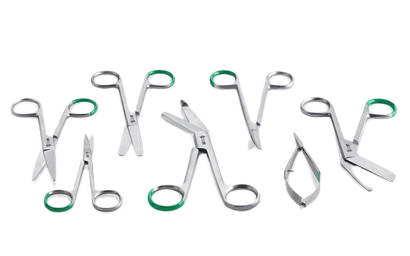
When sourcing dressing scissors for a clinic or hospital, keep the following in mind:
- Size: Common lengths run from 5.5″ to 8″ — shorter for compact procedure trays, longer for general ward use and easier handling.
- Blade finish: Satin/matte finishes reduce glare under operating lights, while mirror-polished finishes are easier to visually inspect for residue after cleaning.
- Steel grade: Look for surgical-grade stainless steel (such as German DIN or equivalent 410/420 grades) that resists corrosion through repeated autoclave cycles.
- Sharp/blunt vs blunt/blunt pairing: Sharp/blunt is the standard configuration for general dressing removal; fully blunt-tipped pairs are preferred for pediatric or highly sensitive-skin use.
Browse Hasni Surgical’s full range of dressing and bandage scissors at our online shop, or contact us for bulk hospital or distributor pricing.
Sterilization & Maintenance Tips
To get the longest possible service life from dressing scissors:
- Rinse and pre-clean immediately after use to prevent blood or adhesive residue from drying onto the blades
- Run through an ultrasonic cleaner before autoclaving to remove debris trapped near the pivot screw
- Dry thoroughly and lightly lubricate the pivot point to keep the cutting action smooth
- Inspect blades regularly for dullness, misalignment, or corrosion and remove damaged pairs from service
For a full look at how surgical stainless steel instruments are cleaned and reprocessed between uses, see our related article on surgical instrument sterilization and cleaning.
Quality & Manufacturing Standards
Reliable dressing scissors start with reliable manufacturing. Hospitals and distributors should look for instruments produced under recognized quality systems such as ISO 13485 for medical device quality management, and materials that meet international standards for corrosion resistance and repeated sterilization.
Sialkot, Pakistan has manufactured surgical instruments for well over a century and remains one of the world’s leading production hubs for stainless steel surgical tools, including dressing and bandage scissors. Read more in our article on surgical instrument manufacturing in Sialkot. Facilities following international infection-control practice, such as the CDC Guidelines for Disinfection and Sterilization, treat every reusable cutting instrument — dressing scissors included — as a critical or semi-critical device requiring validated reprocessing.
Every dressing scissor Hasni Surgical manufactures is produced from corrosion-resistant surgical-grade stainless steel and finished for repeated autoclave use. Learn more about us and our manufacturing standards.
Frequently Asked Questions About Dressing Scissors
What is the main difference between dressing scissors and regular scissors?
Dressing scissors have one rounded, blunt-tipped blade specifically designed to slide safely under a bandage against the skin, whereas regular scissors have two pointed blades that carry a higher risk of accidental injury near a patient.
Are dressing scissors reusable or single-use?
Both options exist. Most hospitals use reusable, autoclavable stainless steel dressing scissors as part of their standard instrument sets, though disposable versions are also available for isolation or single-patient-use scenarios.
What sizes of dressing scissors are commonly used in hospitals?
Common sizes range from 5.5 inches for compact procedure trays up to 7–8 inches for general ward and emergency department use, where a longer handle offers better leverage and control.
Can dressing scissors be autoclaved?
Yes. Dressing scissors made from surgical-grade stainless steel are designed to withstand repeated steam autoclave cycles without corroding, provided they are properly pre-cleaned and dried before each sterilization cycle.
Why is the blunt tip important in a clinical setting?
The blunt tip lets staff work the blade flat against a patient’s skin while cutting through a bandage or dressing, greatly reducing the chance of accidentally puncturing or scratching the skin underneath.
How often should dressing scissors be replaced?
With proper cleaning, sterilization, and storage, a good pair of stainless steel dressing scissors can last for years. They should be replaced or resharpened once the blades become dull, misaligned, or show signs of corrosion.
Are dressing scissors and bandage scissors the same thing?
The terms are largely used interchangeably in clinical practice. Both describe scissors with a blunt lower blade designed to cut bandages, gauze, and dressings safely.
Does Hasni Surgical manufacture dressing scissors?
Yes. Hasni Surgical manufactures a full range of dressing and bandage scissors in surgical-grade stainless steel, built for repeated sterilization and daily clinical use. Contact us for specifications, bulk orders, or OEM branding.
Conclusion: A Small Instrument That Protects Patients Every Day
Dressing scissors may not carry the prestige of a scalpel, but their blunt-tip safety design, versatility, and durability make them one of the most valuable instruments in any clinic or hospital’s daily toolkit. Choosing a well-made, properly sterilizable pair pays off in patient safety, staff efficiency, and long-term cost savings.
Hasni Surgical manufactures premium, ISO-standard dressing and bandage scissors from Sialkot, Pakistan, built to withstand years of clinical use and repeated sterilization cycles. Whether you need a single set or a bulk hospital order, our team can help you choose the right size and finish for your facility.
📩 Ready to order or get a custom quote? Contact us today or browse our full catalogue at our shop. Learn more about Hasni Surgical. Our team responds within 24 hours.
