
Suction Irrigation Cannula: Laparoscopic & Open Surgery Guide
August 3, 2026 2026-08-03 9:40Suction Irrigation Cannula: Laparoscopic & Open Surgery Guide
 hasni
hasni 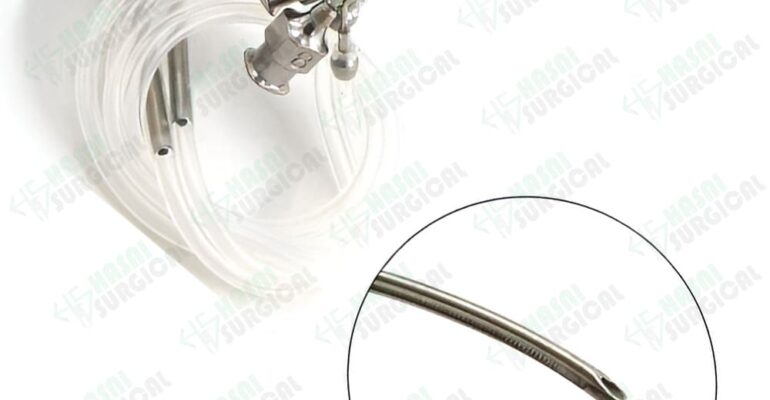
Suction Irrigation Cannula: Laparoscopic & Open Surgery Guide
What Is a Suction Irrigation Cannula?
A suction irrigation cannula is a surgical instrument that combines two functions in a single tool: irrigation (delivering sterile saline or another solution to the surgical site) and suction (removing blood, fluid, smoke, and debris from that same site). It is one of the most frequently used accessory instruments in both minimally invasive and open procedures, because a clear, dry field is essential for safe dissection and accurate visualization. Without reliable suction and irrigation, even routine procedures can become slower and riskier, since surgeons rely on a clean field to identify tissue planes, vessels, and structures they need to avoid.
In its simplest form, the instrument is a long, narrow tube — often with a shaft, a handle with a control valve or trumpet valve, and one or more side ports — connected on the proximal end to separate irrigation and suction lines. A toggle or valve lets the surgeon switch between flushing fluid in and drawing fluid out without changing instruments, which saves time and reduces the number of instrument exchanges during a case. You can read more about the general technique on Wikipedia’s laparoscopic surgery overview.
Because the instrument sits at the intersection of two separate fluid-handling systems, its design has to satisfy a few competing demands at once: it must be narrow enough to pass through small ports or incisions, robust enough to handle repeated sterilization, and precise enough that the valve doesn’t leak or stick under pressure. These constraints are why suction irrigation cannulas look deceptively simple but are, in practice, one of the more carefully engineered instruments in a general or laparoscopic surgery tray, alongside companion tools like hemostats and clamps.

A coaxial irrigation/aspiration (I/A) cannula — this ophthalmic version illustrates the same suction-irrigation working principle used at larger scale in laparoscopic and open surgery instruments.
How Suction Irrigation Actually Works
Mechanically, most suction irrigation cannulas rely on one of two systems: a dual-lumen shaft with separate internal channels for suction and irrigation, or a single-lumen shaft with an external valve that redirects the same channel between a suction source and an irrigation source. Dual-lumen designs allow simultaneous or near-instant switching, which is useful when a surgeon needs to alternate quickly between flushing and clearing fluid. Single-lumen valve designs are usually simpler, lighter, and cheaper to manufacture, but require a brief pause while the valve is toggled.
The suction side is typically connected to a wall suction unit or a portable suction pump, regulated to a safe negative pressure that removes fluid without traumatizing delicate tissue. The irrigation side is connected either to a gravity-fed bag of sterile saline or to a powered irrigation pump that can deliver a controlled, pulsed, or continuous flow. Some advanced systems integrate pressure sensors so that flow rates can be adjusted in real time depending on the tissue being irrigated.
Design and Key Components
- Shaft: Available in different diameters and working lengths (commonly 5mm and 10mm shafts for laparoscopic use, longer probes for deep pelvic or thoracic access).
- Tip design: Blunt, atraumatic tips are standard; some tips include a probe function for gentle blunt dissection, while others have a fenestrated (multi-holed) tip to reduce the chance of tissue occluding the suction port.
- Valve/handle: A trumpet-valve or toggle mechanism controls whether the line is on suction or irrigation; ergonomic handle shape reduces hand fatigue during long procedures.
- Connectors: Standard luer or tubing connectors link the cannula to the hospital’s suction unit and irrigation pump or gravity bag.
- Material: Surgical-grade stainless steel is standard for reusable cannulas because it withstands repeated autoclaving; some disposable versions use medical-grade polymers such as ABS or polycarbonate.
- Markings: Depth markings etched along the shaft help the surgical team track insertion depth, particularly important in laparoscopic and deep pelvic work.
Types of Suction Irrigation Cannulas
Not all suction irrigation cannulas are built the same way, and choosing the right type depends heavily on the procedure:
- Straight cannulas: The most common type, used for general abdominal and pelvic access where a direct line of sight and approach is available.
- Curved/angled cannulas: Designed to reach around organs or into confined spaces such as the pelvis or behind the liver, common in gynecological and hepatobiliary laparoscopy.
- Fenestrated-tip cannulas: Multiple small openings near the tip reduce the risk of tissue being sucked into and blocking a single port, useful when working near friable tissue such as omentum or bowel.
- Single-use (disposable) cannulas: Pre-sterilized, individually packaged, and discarded after one procedure — popular in settings that want to eliminate reprocessing risk or reduce turnaround time between cases.
- Reusable stainless steel cannulas: Designed for hundreds of autoclave cycles, more cost-effective over the long term for high-volume surgical centers — see our Frazier Suction Tubes Set for a widely used reusable design.
- Combined suction-irrigation-cautery probes: Some advanced instruments integrate monopolar or bipolar cautery into the same probe, allowing coagulation without swapping instruments.

A set of suction and irrigation instruments — reusable stainless steel construction is standard for high-volume surgical centers.
Role in Laparoscopic Surgery
In laparoscopic and other minimally invasive procedures, the suction irrigation cannula is introduced through a trocar port alongside the laparoscope and other instruments. Because the surgeon is working through small incisions with an indirect camera view, keeping the field clear is even more critical than in open surgery — blood or fluid on the lens or in the operative field can quickly obscure visualization, forcing the surgeon to pause and clean the camera, which extends operative time and, in some cases, increases risk.
Typical laparoscopic uses include:
- Clearing blood during procedures such as ovarian cyst aspiration, appendectomy, or cholecystectomy
- Irrigating the operative field to dilute contamination and improve visualization
- Aspirating cyst fluid, ascites, or abscess contents
- Gentle blunt dissection or retraction with the cannula tip when a separate probe is not available
- Flushing bile or blood after gallbladder perforation to prevent it from spreading to other quadrants
- Confirming hemostasis at the end of a procedure by irrigating and re-inspecting a dissection bed
Because laparoscopic cannulas must pass through a fixed trocar diameter, manufacturers offer them in standard 5mm and 10mm working diameters, with markings for depth and, in many designs, a rotating or articulating tip for better reach in tight spaces. For a closer look at related minimally invasive tooling, see our guide on thoracic surgical instruments, which covers VATS (video-assisted) suction devices as well, and our breakdown of rib spreaders used in thoracic surgery for open-chest access instruments that are often used alongside suction devices.
Role in Open Surgery
In open abdominal, orthopedic, spinal, and general surgery, suction irrigation cannulas serve a closely related purpose but with a different emphasis: managing larger volumes of fluid and helping reduce the risk of surgical site infection. Intraoperative wound irrigation — flushing the incision or cavity with saline or an antiseptic solution before closure — is a widely practiced step in open procedures, even though its infection-prevention benefit continues to be studied and debated in the literature.
Research on this topic gives a mixed but informative picture. A meta-analysis published in BJS Open on antiseptic wound irrigation after laparotomy found that wound irrigation, whether antiseptic or saline, likely reduces surgical site infection rates after laparotomy, though the added benefit of antiseptic solutions over plain saline remains uncertain. On the other hand, a large randomized trial by the CHIR-Net group did not find a significant reduction in surgical site infections when comparing polyhexanide antiseptic irrigation to saline or no irrigation in patients undergoing laparotomy. Closed suction drainage systems are also used after open procedures such as spinal fusion, where they have been shown effective in managing deep wound infections without requiring removal of hardware.
This means the suction irrigation cannula in open surgery is used for several distinct purposes: clearing the field during dissection, flushing the wound at closure, and — connected to a closed drain — managing post-operative fluid collection. In orthopedic and spinal procedures, high-volume pulsed lavage systems (a specialized form of powered irrigation) are frequently used to remove bone debris and reduce bacterial load before hardware placement. Suction irrigation cannulas are a standard accessory in full laparotomy instrument sets, where they are used continuously alongside retractors and clamps throughout an open abdominal case.
Laparoscopic vs. Open: Key Differences
| Feature | Laparoscopic Cannula | Open Surgery Cannula |
|---|---|---|
| Shaft length/diameter | Longer, fixed 5mm/10mm diameters to fit trocars | Shorter, wider-bore for higher flow rates |
| Primary use | Field clarity, blunt dissection, cyst/fluid aspiration | Wound irrigation, debris clearance, drain management |
| Access | Through a trocar port | Directly into the open cavity or wound |
| Typical procedures | Laparoscopic cholecystectomy, gynecological laparoscopy, appendectomy | Laparotomy, orthopedic and spinal surgery, general open procedures |
| Flow control | Precise, lower-volume control needed for confined spaces | Higher-volume flow for lavage of large cavities or wounds |
| Visualization dependency | Critical — obstructed camera view halts the procedure | Important but less immediately procedure-halting |
Why Material and Manufacturing Quality Matter
A suction irrigation cannula has to tolerate high-pressure fluid flow, repeated sterilization cycles, and precise handling without leaking at the valve or joints — a known failure point in lower-quality designs. At Hasni Surgical, our cannulas are manufactured from German-grade surgical stainless steel in Sialkot, Pakistan, with tight tolerances at the valve seat to prevent the pressure-differential leaks that are a common complaint with poorly made instruments. Every batch goes through dimensional and functional inspection before sterilization and packaging.
Poorly manufactured cannulas tend to fail in a few predictable ways: valve seats that wear quickly and begin leaking suction pressure, welds or joints at the shaft-to-handle junction that crack under repeated autoclave cycling, and lumens that are not properly deburred internally, creating rough surfaces where tissue and debris can catch. These issues are rarely visible on a quick inspection, which is why sourcing from a manufacturer with consistent quality control — rather than the lowest-cost supplier — matters for both patient safety and long-term cost of ownership. To understand how Sialkot became the world’s hub for this level of manufacturing precision, see our overview of surgical instruments manufacturing in Sialkot, Pakistan.
If you already use Hasni Surgical’s surgical forceps or reference our guide on cardiovascular surgical instruments, you’ll notice suction and irrigation devices appear as a standard part of most operative sets — they are rarely used alone, but as a companion to graspers, clamps, and retractors throughout a procedure.
Common Problems and Troubleshooting
Even well-made suction irrigation cannulas can run into issues during a case if they aren’t properly maintained. Some of the most common problems reported by OR staff include:
- Weak or intermittent suction: Usually caused by a partially clogged lumen, a loose tubing connection, or a worn valve seal that allows air to leak into the line.
- Tissue occlusion at the tip: Omentum, clot, or friable tissue can be drawn into the tip and block flow — fenestrated tips reduce this risk but don’t eliminate it entirely.
- Valve sticking: Dried protein or debris inside the valve mechanism from incomplete cleaning after a prior case is one of the most common causes of a sticky or unresponsive trumpet valve.
- Leaking at the handle-shaft junction: Often a sign of a manufacturing defect or metal fatigue after extensive reuse, and a reason to retire an instrument rather than continue using it.
- Inconsistent irrigation flow: Can result from kinked tubing, an underpowered irrigation pump, or a partially occluded lumen.
Most of these problems are preventable with a consistent cleaning and inspection protocol, discussed in more detail below.
Cleaning, Sterilization, and Care
- Flush the internal lumen thoroughly with enzymatic detergent immediately after use to prevent blood or tissue from drying inside the channel.
- Disassemble the valve/handle where the design allows, since debris tends to collect in these moving parts.
- Inspect the lumen for patency and the valve seal for wear before each use, ideally using a lumen brush and backlighting to check for obstructions.
- Autoclave according to the manufacturer’s validated cycle; avoid harsh chemical soaks that can degrade valve seals or promote pitting corrosion on stainless steel surfaces.
- Store cannulas in a dedicated tray or rack rather than loose in a bin, to prevent tip damage from contact with heavier instruments.
- Keep a log of reprocessing cycles for reusable cannulas where your facility’s protocol requires tracking instrument lifespan.
Regulatory Standards and Certifications
Surgical suction irrigation cannulas intended for clinical use are typically manufactured and tested against recognized quality frameworks such as ISO 13485 (medical device quality management systems) and carry CE marking for the European market, alongside compliance with relevant national regulatory requirements for the destination country. Buyers sourcing instruments for hospital or export use should confirm that a supplier’s manufacturing facility holds current certification and can provide material traceability documentation, particularly for stainless steel grade and corrosion-resistance testing.
Choosing the Right Suction Irrigation Cannula
When selecting a cannula, match the instrument to the procedure: diameter and length for laparoscopic trocar compatibility, flow-rate needs for open procedures, tip style (straight, curved, fenestrated, or with a probe function), and reusable stainless steel versus single-use options depending on your sterilization workflow and case volume. A few practical questions to ask before purchasing:
- What trocar sizes does our facility standardize on, and does the cannula’s shaft diameter match?
- Do our case types (gynecological, general, orthopedic) call for a straight or curved tip more often?
- What is our realistic reprocessing turnaround time, and would single-use cannulas reduce bottlenecks during high-volume days?
- Does the supplier provide documentation of stainless steel grade and sterilization validation?
Hasni Surgical supplies both configurations as part of our general and laparoscopic surgery instrument range.
Frequently Asked Questions
Q1: Can the same cannula be used for both suction and irrigation without switching instruments?
Yes — that is the entire purpose of the design. A valve or toggle on the handle switches the internal line between suction and irrigation, so the surgeon can move between the two functions without removing the instrument from the surgical field.
Q2: Is intraoperative wound irrigation always recommended in open surgery?
Evidence is mixed. Some studies support irrigation for reducing surgical site infection, while others, including large randomized trials, have not shown a significant benefit from antiseptic irrigation over saline. Surgeons generally decide based on procedure type, contamination risk, and institutional protocol.
Q3: What sizes are available for laparoscopic use?
Most laparoscopic suction irrigation cannulas are made in 5mm and 10mm shaft diameters to match standard trocar sizes, with shaft lengths suited to abdominal or pelvic access.
Q4: What is the difference between a single-lumen and dual-lumen cannula?
A single-lumen cannula uses one internal channel with an external valve to redirect flow between suction and irrigation. A dual-lumen cannula has two separate internal channels, allowing quicker or even simultaneous switching, at the cost of a slightly larger shaft diameter.
Q5: Are disposable suction irrigation cannulas better than reusable ones?
Neither is universally “better” — it depends on case volume, sterilization capacity, and cost structure. Disposables remove reprocessing risk and reduce turnaround time between cases, while reusable stainless steel cannulas are more cost-effective for high-volume centers with reliable sterile processing departments.
Q6: How often should a reusable suction irrigation cannula be replaced?
There is no fixed universal number of cycles, since it depends on the manufacturer’s validated lifespan, usage intensity, and inspection findings. Instruments should be retired as soon as inspection reveals valve wear, lumen damage, or joint leakage rather than waiting for a fixed cycle count.
Q7: What causes a suction irrigation cannula to lose suction power during a procedure?
The most common causes are a partially occluded tip from tissue or clot, a loose tubing connection allowing air to enter the line, or a worn valve seal. Checking the connection and clearing the tip are usually the first troubleshooting steps.
Q8: Can suction irrigation cannulas be used in orthopedic and spinal surgery?
Yes. In these fields they are frequently used for pulsed lavage to remove bone debris and reduce bacterial contamination before implant or hardware placement, in addition to general field clearance.
Q9: What certifications should I look for when buying suction irrigation cannulas for a hospital or export order?
Look for ISO 13485 manufacturing certification, CE marking for the European market, and documented stainless steel grade and sterilization validation from the manufacturer.
Q10: Do suction irrigation cannulas require a specific type of connector for hospital suction units?
Most use standard luer or universal tubing connectors compatible with common hospital suction and irrigation pump systems, though it’s worth confirming connector compatibility with your facility’s existing equipment before ordering in bulk.
Conclusion
Whether in a minimally invasive laparoscopic case or a large open procedure, the suction irrigation cannula is one of those instruments that quietly makes every other step of the surgery possible — by keeping the field visible and clean. Choosing a well-made instrument, with a reliable valve and consistent flow, is a small decision that has a real effect on operative time and safety. Understanding the different tip designs, lumen configurations, and reprocessing considerations helps surgical teams and procurement staff make a more informed choice for their specific case mix.
Hasni Surgical manufactures suction irrigation cannulas and complete laparoscopic and general surgery instrument sets in Sialkot, Pakistan, exporting to hospitals and distributors worldwide. Contact us for specifications, custom sizing, or bulk order pricing.
