
Rhinoplasty Rib Harvesting Instrument Set: Complete Guide to Costal Cartilage Harvesting Tools (2026)
August 7, 2026 2026-08-07 7:31Rhinoplasty Rib Harvesting Instrument Set: Complete Guide to Costal Cartilage Harvesting Tools (2026)
 hasni
hasni 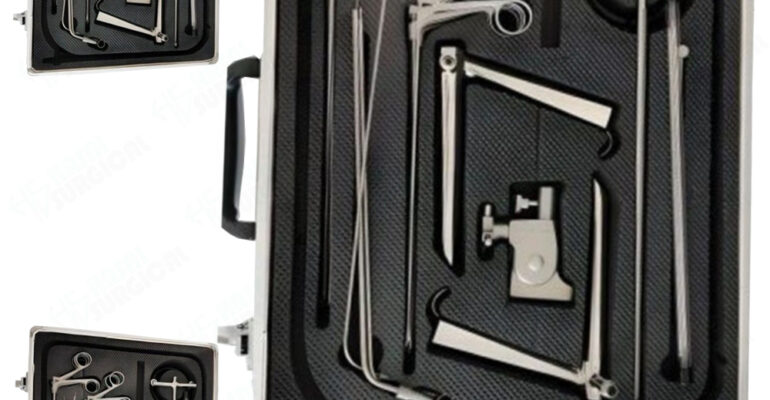
Rhinoplasty Rib Harvesting Instrument Set: Complete Guide to Costal Cartilage Harvesting Tools (2026)

Why Rib Cartilage Matters in Rhinoplasty
When a nose needs more structural support than septal or ear (auricular) cartilage can provide, surgeons turn to costal cartilage — cartilage harvested from the rib cage. According to a review on harvesting costal cartilage for secondary rhinoplasty published in PMC, autologous costal cartilage carries a lower risk of graft harvest morbidity, infection, warping, and extrusion compared to other graft sources, while offering significant versatility in shape, length, and width for nasal reconstruction. This makes it the current gold standard for revision rhinoplasty and complex primary cases, particularly where a large, strong, and abundant graft material is required.
This guide covers the complete instrument set used for costal cartilage harvesting, the surgical technique it supports, and what to look for when building or sourcing a rib harvesting tray for 2026.
Which Rib Is Typically Harvested?
Surgeons don’t harvest from just any rib — selection depends on the amount of cartilage needed and the desired complication profile. A systematic review on current practice in autologous rib and costal cartilage harvest found that open harvest from the 5th to 8th ribs remains the mainstream approach in rhinoplasty and reconstruction, while laparoscopic/endoscopic harvest — gaining attention as a less invasive alternative — more often targets the 9th and 10th ribs. Other sources note that the “floating” 12th rib is sometimes favored specifically for its ease of harvest and adequate length when restoring alar cartilages, the columella, and nasal tip, and that the 7th rib is commonly selected under general anaesthesia for larger reconstructive needs.
The Costal Cartilage Harvesting Instrument Set
Incision and Exposure Instruments
- Scalpel and blade handles: For the skin incision, which modern minimally invasive techniques can limit to as little as 1–3cm in specific cases.
- Skin hooks and retractors: Maintain exposure of the incision site during dissection down to the rectus fascia and underlying cartilage.
- Self-retaining rib/chest retractors: Hold the incision open hands-free once the surgical plane reaches the costal cartilage, keeping the field visible for the harvesting steps that follow.
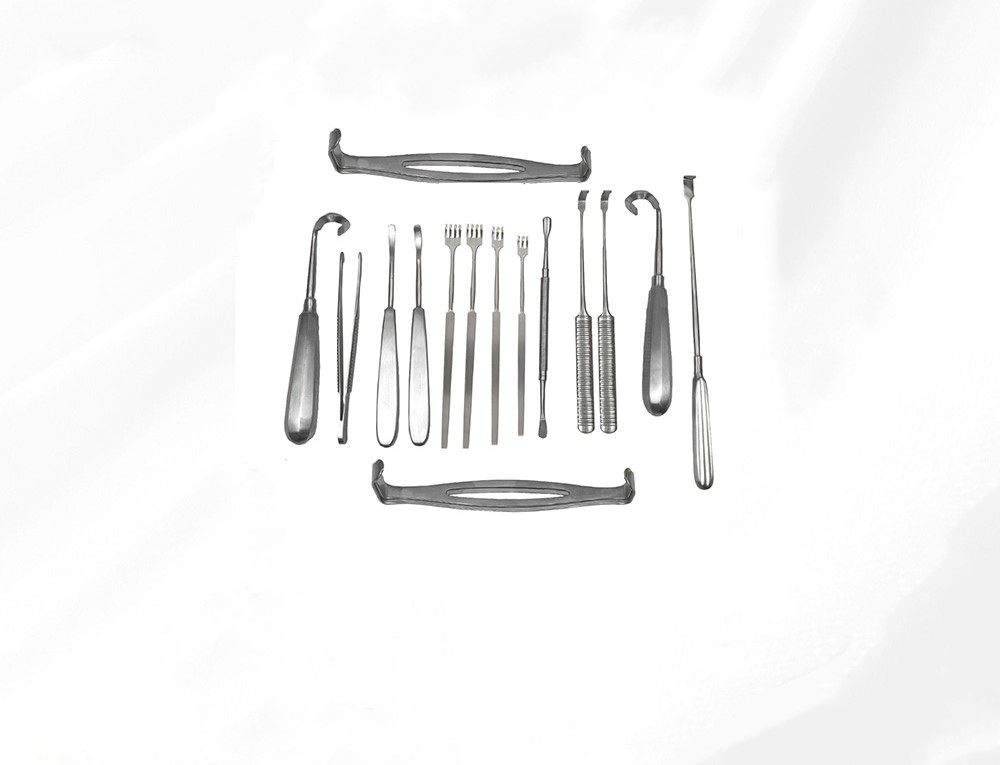
Dissection and Elevation Instruments
- Periosteal/perichondrial elevators: Used to carefully separate the perichondrium from the cartilage surface, and in techniques where the anterior perichondrium is left attached to the harvested graft to help preserve graft integrity.
- Tissue forceps (toothed and non-toothed): For handling and stabilizing tissue layers during dissection through muscle and fascia to the cartilage.
- Metzenbaum and tenotomy scissors: For blunt and sharp dissection through the soft tissue planes overlying the rib cartilage.
Cartilage Harvesting Instruments
- Cartilage/rib elevators (raspatories): Free the cartilage from surrounding perichondrial attachments before the segment is excised.
- Rib cartilage knife or scalpel: Used to score and section the cartilage segment cleanly at the desired length.
- Curved and straight cartilage scissors: For precise trimming of the harvested segment.
- Double-bladed cartilage cutting devices: A category of specialized cutting instruments — generally built around two parallel blades separated by a fixed spacer — designed to produce cartilage slices of uniform thickness, addressing a long-standing limitation of freehand scalpel carving described in surgical device literature on apparatus and methods for cutting costal cartilage.
Graft Shaping and Carving Instruments
- Cartilage carving blocks and cutting guides: Provide a stable surface and reference lines for shaping harvested cartilage into spreader grafts, columellar struts, or tip grafts.
- Fine rasps and files: For refining graft surface contour once the basic shape has been cut.
- Balanced cross-section technique instruments: Because peripheral cuts from the outer rib cartilage carry a higher risk of post-placement warping, instruments that allow surgeons to obtain balanced cross-sections from the central core of the rib are preferred wherever graft stability is a priority.
Hemostasis and Closure Instruments
- Bipolar cautery: Controls bleeding from small vessels encountered during dissection and cartilage removal.
- Needle holders and sutures: For layered closure of the fascia, muscle, and skin following graft harvest.
- Local anesthetic infiltration instruments: Used at the donor site to help manage postoperative pain, which patients undergoing this procedure commonly report as minimal when modern technique is used.
Minimally Invasive and Endoscopic Harvesting Approaches
Traditional open costal cartilage harvest can involve a larger incision and, per some clinical literature, comes with recognized drawbacks including donor-site pain, thoracic wall deformity, synchondrosis, and a more visible scar. A study on a minimally invasive costal cartilage harvesting technique published in PMC describes an approach using an incision smaller than 1.5cm across 36 patients, reporting no infections, no chest wall deformities, and only two cases of pneumothorax as a complication — with patients reporting minimal donor-site pain overall. Other innovative approaches referenced in the literature include trans-umbilical endoscopic harvesting and the use of fresh frozen homologous rib cartilage as an alternative when autologous harvest isn’t suitable.
What This Means for Instrument Selection
Minimally invasive and endoscopic harvesting techniques generally require a more specialized, smaller-profile instrument set — narrower retractors, longer-reach elevators, and endoscopic visualization equipment — compared to traditional open harvest trays built around standard-length dissection instruments. Clinics building out a costal cartilage harvesting capability should decide early which technique they intend to standardize on, since the two approaches are not fully interchangeable at the instrument-tray level.
Where Harvested Cartilage Is Used
- Dorsal augmentation: Building up nasal bridge height and correcting saddle-nose deformities.
- Columellar strut grafts: Providing structural support to the nasal tip.
- Spreader grafts: Correcting internal nasal valve collapse and improving airflow alongside aesthetic outcomes.
- Alar and tip grafts: Refining and supporting the lower nasal third in complex revision cases.
- Ear and craniofacial reconstruction: Costal cartilage is also used in ear (microtia) reconstruction and certain cleft palate repairs, sharing much of the same harvesting instrumentation.
What to Verify Before Sourcing a Rib Harvesting Instrument Set
- Confirm ISO 13485 and CE certification for the manufacturer, standard expectations for surgical instruments used in structural graft procedures
- Check that the set includes both harvesting instruments (elevators, cartilage knives, cutting guides) and closure instruments (needle holders, retractors) rather than a partial tray
- Decide whether your clinic will standardize on open or minimally invasive harvest, since instrument sizing differs between the two approaches
- Confirm surgical-grade stainless steel construction rated for repeated autoclave sterilization cycles
Hasni Surgical manufactures plastic and reconstructive surgery instrumentation — including nasal and cartilage harvesting instruments — from its Sialkot, Pakistan facility. Reach the team by phone at +92 308 5391894, by email at info@hasnisurgical.com, or through hasnisurgical.com.
Related Reading
If you’re building a complete rhinoplasty instrument inventory, our 16 Pcs Rhinoplasty Nasal Surgery Instrument Set covers the core nasal-side instrumentation — Aufricht retractors, Cottle elevator, and graduated nasal rasps — that pairs directly with a rib harvesting tray for structural rhinoplasty cases. For general plastic and reconstructive surgery sourcing, see our guide to innovative implantology tools and techniques and our overview of how surgical instruments are sterilized, which applies directly to reprocessing harvesting instruments between cases.
Frequently Asked Questions
Q1: Why is costal cartilage preferred over septal or ear cartilage in some rhinoplasty cases?
Costal cartilage offers a much larger volume of strong, abundant graft material with lower risk of harvest morbidity, infection, warping, and extrusion, making it the preferred choice when septal or auricular cartilage is insufficient or unavailable, particularly in revision rhinoplasty.
Q2: Which rib is most commonly used for cartilage harvesting?
Open harvest most commonly uses the 5th to 8th ribs, while minimally invasive/endoscopic approaches more often target the 9th or 10th rib; the “floating” 12th rib and 7th rib are also used in specific cases depending on the amount of cartilage needed.
Q3: What instruments are used to prevent cartilage graft warping?
Instruments and techniques that allow surgeons to harvest balanced cross-sections from the central core of the rib, rather than peripheral cuts, help minimize the warping that can occur after graft placement.
Q4: How small can the harvesting incision be with modern technique?
Minimally invasive techniques have been described using incisions smaller than 1.5cm, with some surgeons using incisions in the 1–3cm range depending on the case and technique.
Q5: What complications are associated with costal cartilage harvesting?
Traditional open harvest carries recognized risks including donor-site pain, thoracic wall deformity, synchondrosis, and visible scarring; a minimally invasive study reported pneumothorax in a small number of cases with no infections or chest wall deformities among the patients studied.
Q6: What is a double-bladed cartilage cutting device used for?
It’s a specialized instrument designed to produce cartilage slices of uniform thickness, using two parallel blades separated by a fixed spacer, addressing the difficulty of achieving consistent thin slices with a standard scalpel alone.
Q7: Is endoscopic costal cartilage harvesting widely used?
It’s gaining attention as a less invasive alternative and is reported as the second most common approach after open harvest in recent literature, though open harvest of the 5th–8th ribs remains the mainstream technique overall.
Q8: What other procedures use costal cartilage besides rhinoplasty?
Costal cartilage grafts are also used in ear (microtia) reconstruction and certain cleft palate repairs, sharing much of the same harvesting instrumentation used in rhinoplasty cases.
Q9: Do minimally invasive and open harvesting techniques use the same instrument sets?
Not fully — minimally invasive and endoscopic approaches generally require narrower retractors and longer-reach, smaller-profile instruments compared to standard open-harvest trays, so clinics should decide which technique they’ll standardize on before sourcing instrumentation.
Q10: What should I check before ordering a costal cartilage harvesting instrument set?
Confirm ISO 13485 and CE certification, verify the set includes both harvesting and closure instruments, confirm surgical-grade stainless steel construction rated for repeated sterilization, and match instrument sizing to whether your clinic uses open or minimally invasive technique.
Conclusion
Costal cartilage harvesting combines general surgical exposure technique with highly specialized cartilage-handling instruments — from perichondrial elevators and cartilage knives to precision cutting guides designed to prevent graft warping. As minimally invasive and endoscopic harvesting techniques continue to gain adoption alongside traditional open harvest, instrument sets are evolving accordingly, and clinics building this capability should choose their tray configuration based on which technique they intend to standardize on. Whichever approach you use, instrument quality directly affects both graft integrity and donor-site outcomes for the patient.
