
How Hemostats Work: Function, Types & Surgical Applications
July 24, 2026 2026-07-24 12:29How Hemostats Work: Function, Types & Surgical Applications
 hasni
hasni 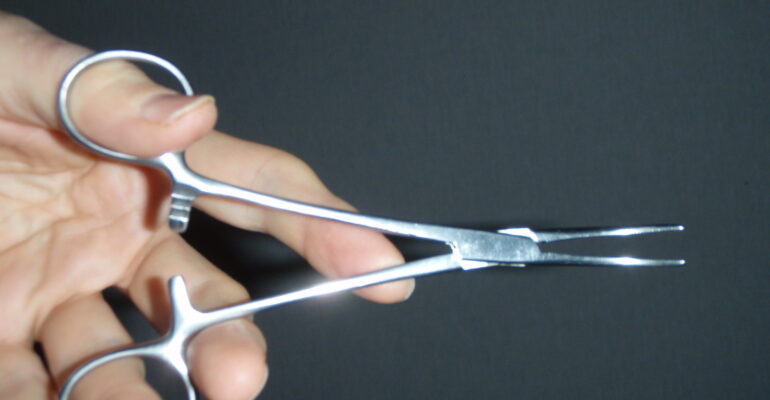
How Hemostats Work: Function, Types & Surgical Applications
Walk into any operating room and you’ll find hemostats within arm’s reach of the surgeon, clipped along the drapes, lined up on the instrument tray, or already clamped onto a bleeding vessel. Despite their simple, scissor-like appearance, hemostats are one of the most relied-upon tools in surgery. In this guide, we break down how they work, the main types used across specialties, and where each one fits into a procedure.
What Is a Hemostat?
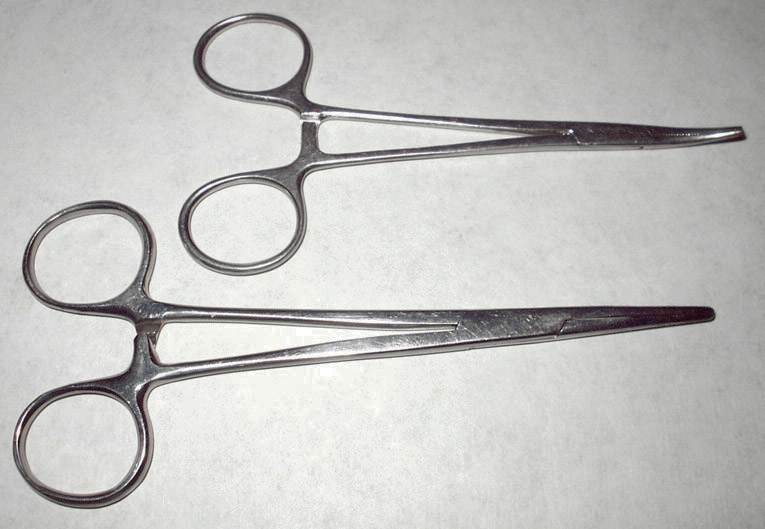
A hemostat, also called a hemostatic clamp or artery forceps, is a pliers-like surgical instrument used to clamp blood vessels and control bleeding during a procedure. According to Wikipedia, the design combines elements of pliers and scissors, and the instrument belongs to a broader family of pivoting, ratchet-locked tools that also includes needle holders and tissue clamps.
The name “hemostat” comes from hemostasis, the physiological process of stopping blood loss. Surgeons have used clamping instruments to control bleeding since antiquity, but the modern ratcheted design is largely credited to the French surgeon Jules-Émile Péan, whose name is still used for one style of hemostat today.
How Do Hemostats Work?
The mechanics of a hemostat are straightforward but effective:
- Pivot point (box lock): Two shanks cross and pivot at a fixed point, similar to a pair of scissors. This is the hinge that lets the jaws open and close.
- Serrated or textured jaws: The tips are lined with horizontal or cross-hatched serrations that grip vessels or tissue without letting them slip out.
- Ratchet lock: A stepped ratchet mechanism on the handles lets the surgeon lock the jaws at a set pressure, so the clamp stays closed hands-free once applied.
- Ring handles: Finger rings give the surgeon or assistant precise control over opening, closing, and releasing the instrument.
Once locked, a hemostat applies roughly 40 N of clamping force between its tips, enough to occlude a vessel without cutting through it. This lets the surgeon move on to the next step, whether that’s tying off the vessel with a suture or continuing the dissection, without holding pressure by hand.
Main Functions of a Hemostat in Surgery
Hemostats aren’t limited to one job. Across specialties, they typically serve three core functions:
- Hemorrhage control: Clamping a cut or exposed vessel to stop bleeding before it is ligated (tied off) or cauterized.
- Tissue handling: Grasping and holding fascia, tissue, or a surgical sponge securely during dissection, debridement, or wound exploration.
- Suturing assistance: Working alongside needle holders to hold suture ends, pass ties through tight spaces, or stabilize tissue while a knot is placed.
Types of Hemostats and Their Uses
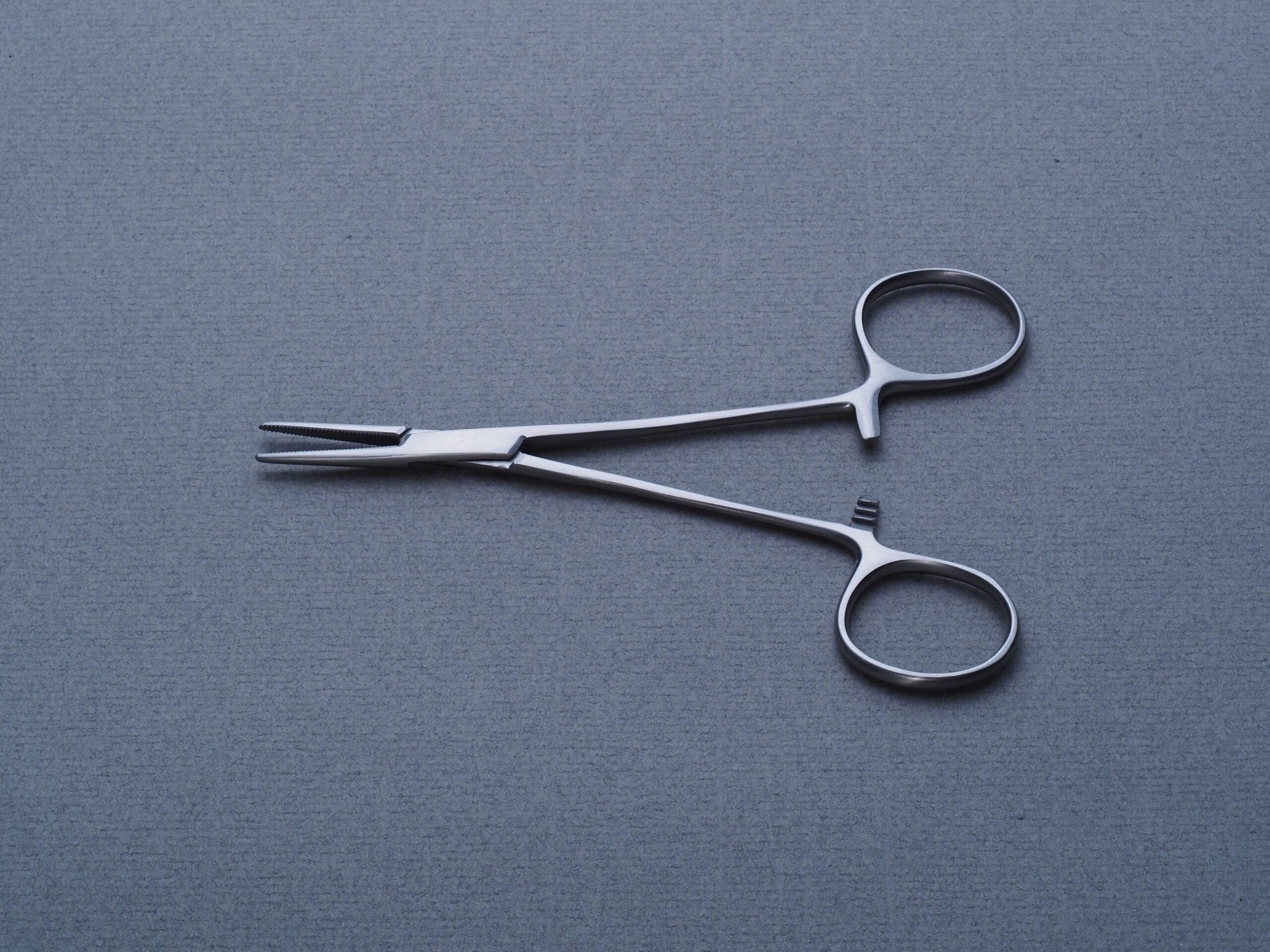
Hemostats come in a range of sizes, jaw patterns, and curvatures, and each style is suited to a different job. If you’re comparing hemostats to other surgical forceps in general, here’s how the main hemostat types differ:
Mosquito Forceps
The smallest and most delicate hemostat, typically 3–5 inches long with fine, fully serrated jaws. Mosquito forceps are used for clamping small, superficial blood vessels in delicate procedures such as plastic surgery, ophthalmic surgery, and pediatric cases. For slightly deeper vascular work, our artery mosquito forceps offer the same fine control with added reach.
Kelly Forceps
Slightly larger than a mosquito clamp, with serrations that run only along the distal half of the jaw. Kelly forceps are a general-purpose hemostat used for clamping medium-sized vessels and grasping tissue in a wide range of procedures. The design is credited to Howard Atwood Kelly, one of the founding professors of Johns Hopkins Hospital. Browse our Kelly forceps range for available sizes.
Kocher Forceps
A toothed, traumatic clamp with interlocking teeth at the tip, designed to firmly grip tougher tissue such as fascia or tissue that will be excised, rather than delicate vessels. It’s named after Emil Theodor Kocher, the Swiss Nobel laureate surgeon. See our Kocher forceps range for options.
Crile Forceps
Similar in size to the Kelly clamp, but with serrations running the full length of the jaw. Crile forceps are commonly used for blunt dissection as well as vessel clamping, and take their name from George Washington Crile, co-founder of the Cleveland Clinic. Explore our Crile forceps range for available sizes and jaw patterns.
Rochester-Pean Forceps
A larger hemostat, around 6.25–7.5 inches long, with fully serrated jaws for clamping bigger vessels and bundles of tissue. Sometimes referred to as the “Big Kelly,” the Pean forceps takes its name from Jules-Émile Péan and is a staple in major open surgery.
Rochester-Carmalt Forceps
Recognizable by the longitudinal serrations with cross-hatching at the tip, Carmalt forceps are heavy-duty hemostats built for crushing and clamping large pedicles before ligation, and are especially common in veterinary surgery.
Surgical Applications
Because they’re inexpensive, reusable, and easy to sterilize, hemostats show up across nearly every surgical discipline:
- General and abdominal surgery: Lining an incision with hemostats on vessels awaiting ligation, and clamping pedicles during procedures like appendectomies or hernia repairs.
- Vascular surgery: Temporarily occluding smaller branch vessels while a primary vessel is repaired or grafted.
- Dental and oral surgery: Grasping soft tissue, controlling minor bleeding, and manipulating small structures in a confined surgical field.
- Veterinary surgery: Larger hemostats such as Rochester-Carmalt and Rochester-Ochsner forceps are used to clamp pedicles during spays, neuters, and other soft-tissue procedures.
- Emergency and wound care: Controlling hemorrhage in trauma cases and exploring deep or contaminated wounds before closure.
A more detailed look at how hemostats compare with hemostasis techniques in general can be found on ScienceDirect, which covers their use across dermatologic, wound care, and microsurgical settings.
Choosing the Right Hemostat
The right hemostat for a given task depends on three factors:
- Vessel or tissue size – smaller, more delicate vessels call for a mosquito or Kelly clamp, while larger pedicles need a Pean or Carmalt forceps.
- Jaw pattern – fully serrated jaws grip more firmly but can be more traumatic; partial serrations are gentler on delicate tissue.
- Straight vs. curved tips – curved hemostats offer better visibility and reach around structures, while straight hemostats are often preferred for surface-level clamping.
If you’re setting up a full tray rather than a single instrument, a hemostat is usually bundled alongside scissors, forceps, and retractors in a surgical dissection kit.
Care and Sterilization
Like all ratcheted instruments, hemostats need regular inspection to stay safe and effective. Surgical teams routinely check the box lock for cracks, the ratchet for wear, and the jaw alignment to make sure the tips meet evenly along their full length. Hemostats should never be used to clamp tubing, since repeated over-clamping is a common cause of box lock failure. With proper cleaning and autoclave sterilization between uses, a well-made hemostat can remain in service for years.
Final Thoughts
From the smallest mosquito forceps to the heavy-duty Rochester-Carmalt clamp, hemostats remain one of the simplest yet most essential tools in the operating room. Choosing the right type, and maintaining it properly, plays a real role in surgical efficiency and patient safety.
At Hasni Surgical, we manufacture a full range of hemostatic forceps in premium surgical-grade stainless steel, built to hold their ratchet and jaw alignment through repeated sterilization cycles. Browse our hemostat and forceps range to find the right instrument for your practice.
