
How to Recognize these 8 Important Instruments in a Typical Neuter/Spay Pack
August 30, 2025 2025-08-30 5:11How to Recognize these 8 Important Instruments in a Typical Neuter/Spay Pack
 hasni
hasni 
How to Recognize these 8 Important Instruments in a Typical Neuter/Spay Pack
Spaying and neutering are two of the most prevalent and routine surgeries in veterinary medicine. Not only do these surgeries assist in population control, but they also enhance the health and lifespan of pets. Becoming familiar with the tools in a typical spay pack and how to use each is one of the first things to learn for veterinary students, new graduates, and surgical technologists.
Although the actual arrangement between clinics may differ slightly, the typical spay pack will include a standard complement of instruments that are suited for soft tissue surgery with minimal waste. The following is a step-by-step walkthrough of the typical instruments in a veterinary spay pack, their identifying characteristics, and their uses.
Why Instrument Identification Is Important to Learn
Prior to learning the veterinary tools, it is important to understand why instrument identification is critical in veterinary school:
- Efficiency: Identification of the instrument to administer to the surgeon results in saving time in the operating room.
- Safety: The incorrect instrument will damage fragile tissues or prolong recovery.
- Confidence: Students and assistants knowing their instruments become reliable team members.
- Surgical Success: Utilization of the correct instrument enhances surgical results and minimizes complications.
Types of Instruments in a Veterinary Spay Pack
The majority of instruments belong to one of the following general types:
- Cutting and Dissecting Instruments – scissors, scalpels
- Clamping and Hemostatic Instruments – forceps and clamps to prevent bleeding
- Tissue Handling Instruments – thumb forceps, spay hooks, retractors
- Needle Holders and Suturing Instruments – for closing incisions

1. Scalpels and Blades
How to Identify:
Scalpel handle is usually flat and lightweight, with grip grooves.
Blades are removable and come in sizes: No. 10, 11, or 15 are standard.
- No. 10 blade: curved blade, great for big incisions (dogs).
- No. 15 blade: very small and precise, usually used for cats or fine cuts.
- No. 11 blade: triangular tip for stab incisions.
Use in Spay/Neuter:
Used to incise the skin and dissect through tissue planes in order to gain access to the abdomen.

2. Scissors
Two sets of scissors feature in these kits, each with its own specific role.
Mayo Scissors
- Look: Thick, heavy blades that have blunt tips.
- Use: To cut tough tissue such as fascia, ligaments, or sutures.
Metzenbaum Scissors
- Look: Long handles with long, thin, delicate blades.
- Use: Dissecting and cutting soft tissue.
Tip for Students studying veterinary medicine:
Mayo = muscle and tough tissue. Metzenbaum = muscle membrane (delicate work).

3. Hemostatic Forceps (Clamps)
Hemostats are used to control bleeding and hold tissue. They are one of the most frequently used instruments in spay/neuter surgeries.
Mosquito Hemostats
- Appearance: Delicate and small, with fine serrations.
- Use: Clamp small vessels in cats or small dogs.
Kelly Hemostats
- Appearance: Medium; serrations only halfway down the jaws.
- Use: Clamping larger vessels or bundles of tissue.
Crile Hemostats
- Appearance: Same as Kelly, but serrations are the full length of the jaws.
- Use: Firmer hold on big vessels.
Rochester-Carmalt Forceps
- Appearance: Large, extended clamps with longitudinal grooves and cross-hatching on the tips.
- Use: Often used to clamp uterine body and ovarian pedicles during spays.
Tip for Students in Veterinary Medicine:
Rochester-Carmalt = the “big guns” for spays.

4. Tissue Forceps (Thumb Forceps)
They are applied by surgeons to hold, manipulate, or stabilize tissue without inflicting a great deal of trauma.
Adson Forceps
- Shape: Short, broad handles tapering to a thin tip.
- Application: Holding the skin during closure.
Brown-Adson Forceps
- Shape: Essentially the same as Adson, but with fine rows of teeth at the tip.
- Application: Tissues held firmly, useful when suturing.
Debakey Forceps
- Shape: Long, atraumatic ridges rather than teeth.
- Application: Manipulation of delicate tissue such as intestines or vessels.

5. Spay Hook (Snook Hook)
How to Identify:
A thin, stainless-steel, long, hooked instrument.
Purpose:
- To locate and reveal the uterine horns in spay surgery, especially for cats and small dog breeds.
- Decreases the need for a large incision.
Tip: The spay hook is one of the most characteristic and recognizable pieces in the spay pack.

6. Retractors
Retractors are used to hold back tissues and improve visibility.
Senn Retractor
- Appearance: Double-ended with one blunt end and one rake-like end.
- Use: Used for skin and soft tissue retraction.
Army-Navy Retractor
- Appearance: Two flat, blunt blades at each end.
- Use: For deeper retraction of muscle and abdominal wall layers.
Gelpi Retractor
- Appearance: Self-retaining, with two sharp tips that spread apart.
- Use: Keeps the surgical field open without needing an assistant’s hands.
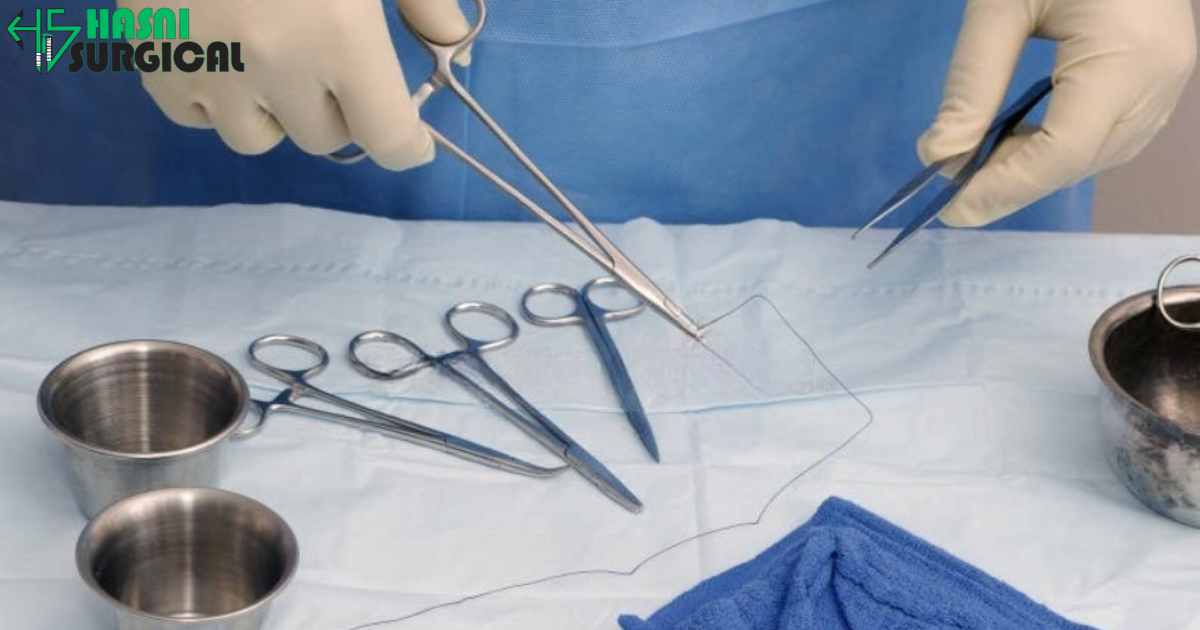
7. Needle Holders
Needle holders secure surgical needles while placing sutures.
Olsen-Hegar Needle Holder
- Appearance: Similar to hemostats, but with built-in cutting blades.
- Use: Holds the needle and cuts sutures—saves time.
Mayo-Hegar Needle Holder
- Appearance: Like Olsen-Hegar but without cutting blades.
- Use: For precise suturing when separate scissors are preferred.
Tip: Many spay/neuter kits favor Olsen-Hegar for efficiency.

8. Suture Materials and Needles
Needles
- Swaged Needles: Suture is directly attached to needle (no threading required).
- Cutting Needles: Triangular tip, used on skin.
- Taper Needles: Round shape, used on delicate tissues such as muscle or intestines.
Sutures
- Absorbable (Vicryl, PDS, Catgut): For closure of internal wounds.
- Non-Absorbable (Nylon, Prolene): Occasionally used on skin.
9. Additional Instruments

Scalpel Blade Holder (Blade Removal Tool)
- Ensures safe handling when changing blades.

Towel Clamps (Backhaus)
- Appearance: Sharp, pointed clamps.
- Use: Secure surgical drapes to the animal’s skin.

Suction Tips (optional)
- Frazier or Yankauer suction tips may be included in advanced kits for abdominal fluid removal.
How to Memorize Veterinary Tools Quickly
For students and assistants, memorizing instruments can be intimidating. Here are some tips:
- Group by Function: Learn tools in categories (cutting, clamping, retracting).
- Use Mnemonics: For example, “Mayo for muscle, Metz for membrane.”
- Hands-On Practice: Repetition builds familiarity—hold and name instruments regularly.
- Flashcards: Use photos of instruments with names on the back.
- Observation in Surgery: Watching real procedures helps cement knowledge.
Common Mistakes to Avoid
- Confusing Kelly vs Crile Hemostats: Remember the serrations difference.
- Using the Wrong Scissors: Don’t use Metzenbaums for cutting sutures—they’ll dull quickly.
- Over-Gripping Tissue with Forceps: Use atraumatic forceps (like Debakey) for delicate handling.
- Forgetting Sterility: Always pass instruments properly without touching non-sterile surfaces.
Final Thoughts
Identifying and understanding the instruments in a spay/neuter kit is a cornerstone skill for veterinary students, new veterinarians, and surgical assistants. From scalpels to spay hooks, each tool has a defined role that contributes to surgical efficiency, safety, and patient recovery.
With practice, you’ll move from hesitating over which instrument to hand the surgeon to confidently anticipating their next request. And in the fast-paced environment of veterinary surgery, that confidence is invaluable.
FAQs
Q1: Are neutering kits the same for cats and dogs?
Mostly, yes. The core instruments are the same, but feline kits often include smaller, more delicate instruments.
Q2: How many instruments are typically in a spay/neuter kit?
On average, 15–25 instruments, depending on whether extras like suction tips or self-retaining retractors are included.
Q3: Can spay/neuter instruments be used for other surgeries?
Yes, many instruments overlap with general soft tissue surgery kits. However, procedure-specific tools (like spay hooks) are unique.
