
Top 7 Surgical Tools for Better Recovery and to Reduce Scarring: Precision in Healing and Aesthetics
January 22, 2025 2025-02-25 4:41Top 7 Surgical Tools for Better Recovery and to Reduce Scarring: Precision in Healing and Aesthetics
 hasni
hasni 
Top 7 Surgical Tools for Better Recovery and to Reduce Scarring: Precision in Healing and Aesthetics
While surgery mainly aims at reestablishing health and functionality, with the advancement of modern medicine, the patient’s expectation has also shifted towards the result that not only grants better recovery but also leaves behind an aesthetic outcome. This concern is highly critical for the surgeons and their patients, as minimizing scarring leaves an impact on the self-esteem of a person, his emotional well-being, and long-term confidence.
With the advancements in surgical instrumentation, the cuts are precise, tissue is gently manipulated, and the wound is closed properly to ensure minimum scarring. This blog provides details about the leading surgical instruments responsible for good recovery and minimum scar development. Our main aim has been to elaborate on the scope of precision that a surgical procedure needs with patients in mind.
Surgical Instrument and their Uses
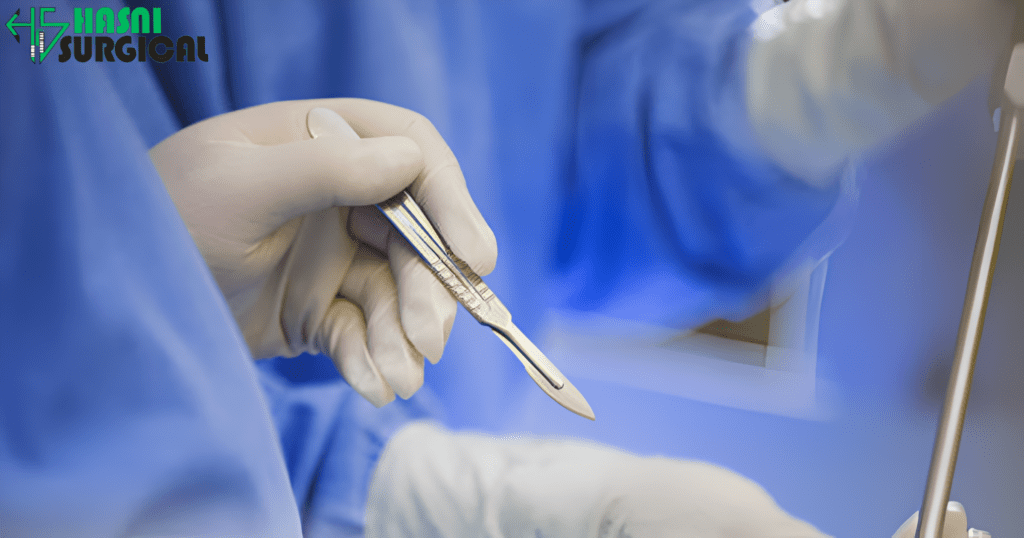
1. Scalpels used in Surgery: The Science of Clean Cuts
The base of minimal scar formation is the well-made incision. A well-made incision is essentially related to surgical scalpels. Known for their sharpness, these scissors are crucial. The sharper the blade, the cleaner the incision is, and there is a lower chance of any irregular scar forming.
Good-Quality Scalpels
- Micro-thin blades: give the opportunity of making cuts that are very thin and less likely to traumatize the tissue at the cut place.
- Ergonomic Handles: Offer the surgeon more control for cleaner and smoother incisions.
Common Scalpels
No. 10 and No. 15 blades: general surgery, due to their versatility.
No. 11 Blade: Best for fine, straight incisions. Used in delicate surgeries such as facial procedures or neurosurgery.
High-quality surgical scalpels, especially those made by leading manufacturers, have changed the surgical outcome by allowing surgeons to work with precision.
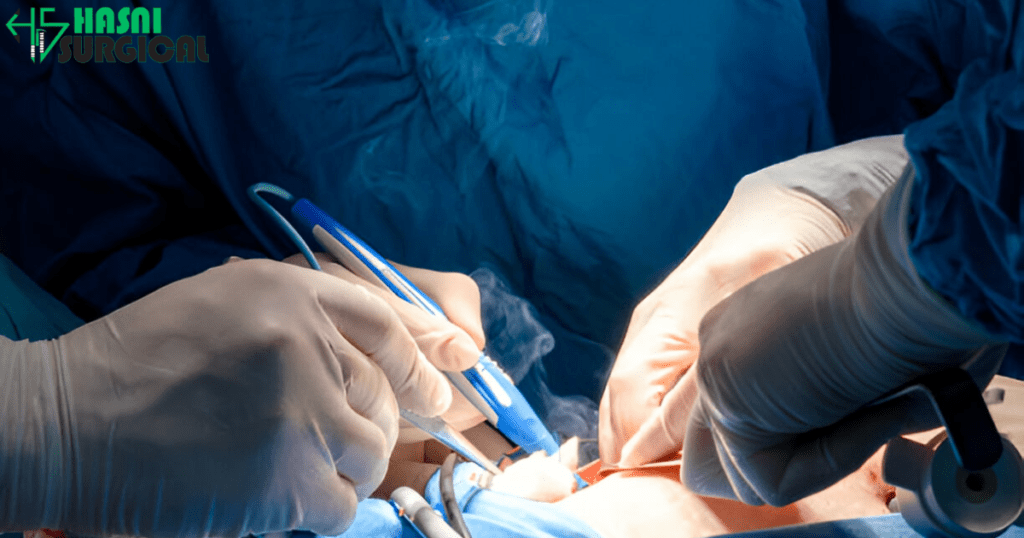
2. Electrosurgical Instruments: Precision with Less Tissue Trauma
Electrosurgical instruments are quite helpful in surgery where precision cuts have to be achieved. These cut tissue or coagulate blood with the aid of high-frequency electrical currents. These are unlike conventional scalpels, where cutting and sealing of tissues occurs simultaneously and reduces bleeding and trauma, making less chance for scarring to take place.
Benefits for Scarring Minimization:
- Controlled Energy Delivery: This means that surgeons can target specific tissue layers without impacting the surrounding structures.
- Less bleeding: It ensures an open field at the time of surgery and diminishes postoperative inflammation.
- Good Healing Environment: The tools reduce trauma, hence enhance wound healing
Applications like excision of moles, grafting of the skin, and facial surgeries hugely benefit from electrosurgical precision.
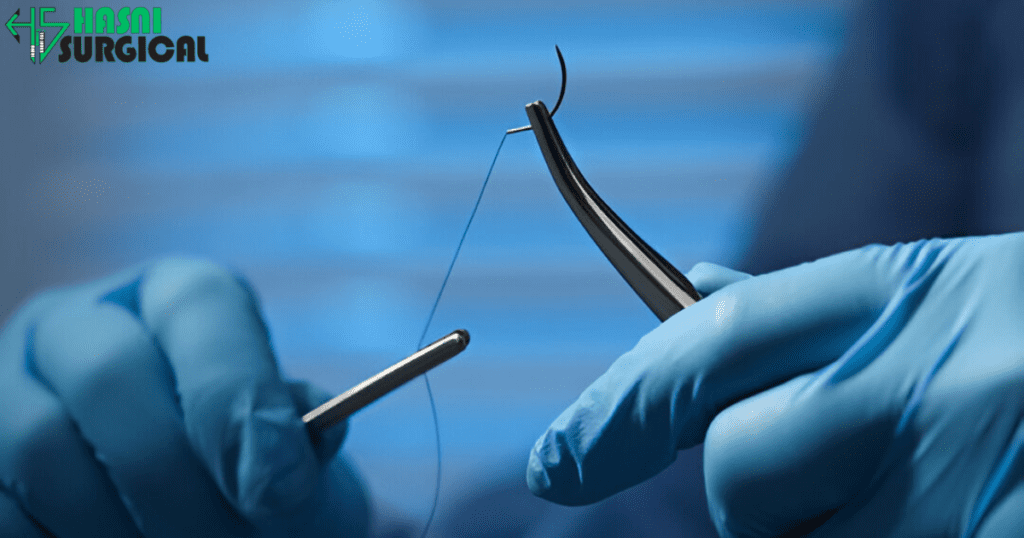
3. Sutures: The Art of Wound Closure
As much importance is attached to the incision as the actual wound closure procedure determines the eventual look of the scar. Proper surgical sutures provide strength and ensure biocompatibility at the suture site for optimum healing of the wound with the fewest tension gaps.
Types of sutures for aesthetic results:
- Absorbable Sutures: These are materials like polyglycolic acid that get absorbed in the body. So, they need not be removed, and no extra trauma is caused to the healing tissue.
- Monofilament Sutures: As the name says, they have a monofilament nature, hence causing less tissue drag as compared to braided sutures, which helps prevent inflammation and hypertrophic scarring.
- Barbed sutures: They are mainly used in minimally invasive surgeries. These avoid knots, which will create stress points in the skin.
Advanced Techniques
Surgeons often use subcuticular suturing, where sutures are placed beneath the skin’s surface, to make the scar smooth and flat. This technique, in combination with good-quality sutures, provides excellent aesthetic results.
4. Tissue Forceps: Cautious Grip for Better Recovery
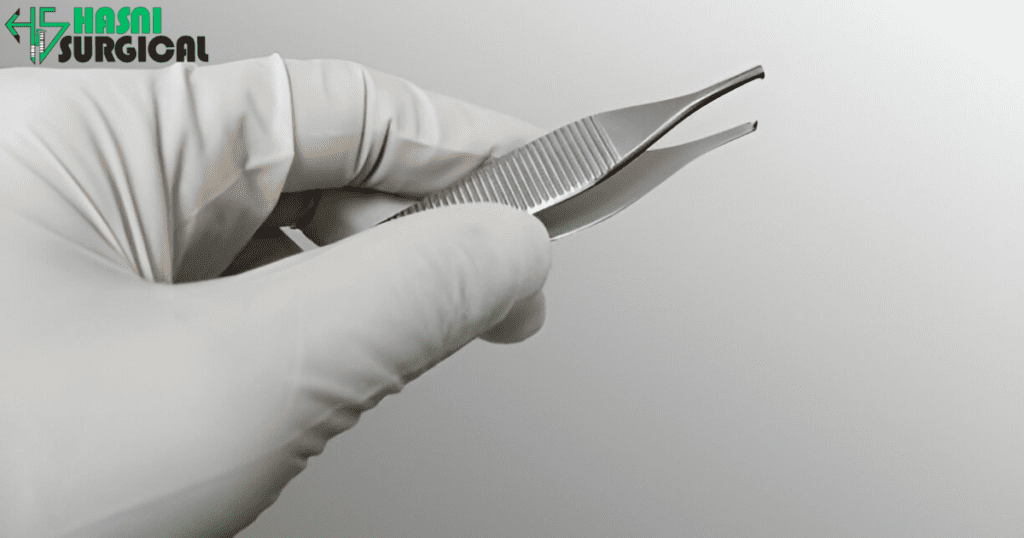
The correct handling of tissues during surgery ensures minimal damage to the tissues for healthy healing. Tissue forceps are meant to hold and manipulate delicate structures without crushing them. They must have the right grip pressure.
Key Characteristics of Excellent Tissue Forceps
- Extremely Fine Tips: These forceps can offer precise handling, especially in micro- and neurosurgical procedures.
- Serrated Grips: They have a firm hold without causing unwarranted tissue trauma.
Variants with Specific Applications:
- Adson Forceps: These are used in most plastic surgery as they have a gentle grip on tissue.
- Bayonet Forceps: These are usually used in ENT and neurosurgery as they are ergonomic with fine control.
5. Dermatomes and Skin Grafting Instruments
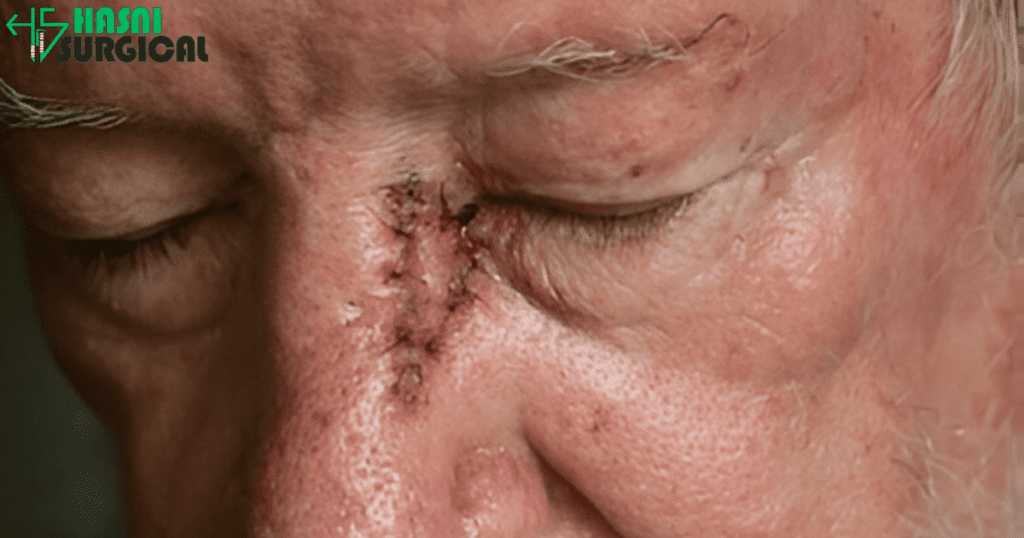
The dermatomes and all other instruments designed for skin grafting will go a long way in determining the scarring that should be expected when undergoing surgery that involves skin grafts, for instance, reconstructive burn surgery or cosmetic surgery. Dermatomes are instrumental in harvesting thin, uniform layers of skin whose success in the grafting is critical.
How They Minimize Scarring:
- Uniform Grafts: They help ensure uniform healing and minimize the chances of irregular scarring.
- Adjustable Depth Settings: The settings also allow the thickness, depending on the need and requirement of the patient, to vary while harvesting the skin as the surgeon proceeds.
6. Surgical Scissors: Fine Cutting for Fine Cut Details
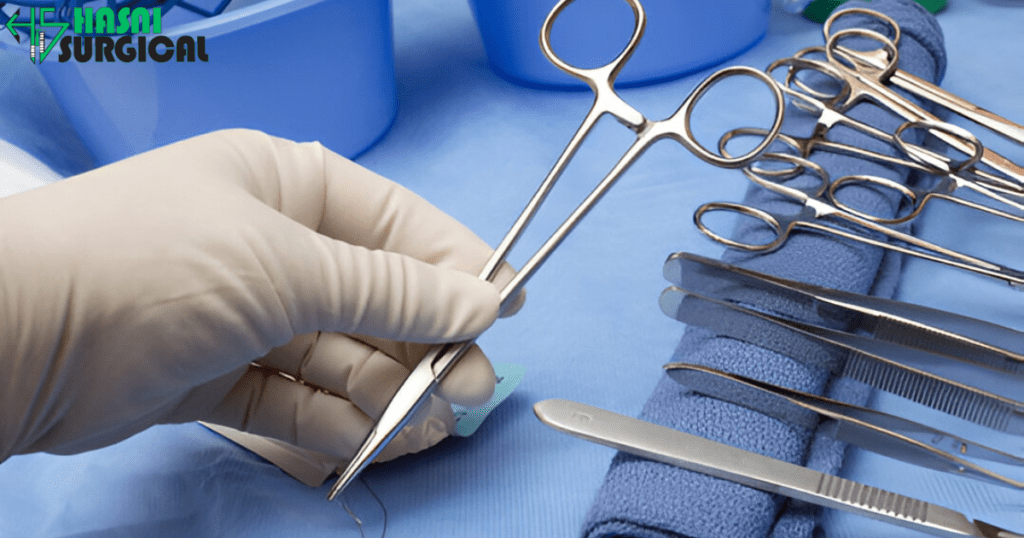
While scalpels are made to cut basic incisions, surgical cuts on tissues are mostly done by surgical scissors. Only fine cutting can be given by a good physician using a good-quality surgical scissors without much damage to the tissue; hence, its healing becomes better.
Fine Cut Surgical Scissors Examples:
- Iris scissors are used for fine dissection in cosmetic and reconstructive surgery.
- Metzenbaum scissors: used for thin tissue cuts, thus often in soft tissue surgeries.
7. Minimally Invasive Instruments: Small Tools for Big Results
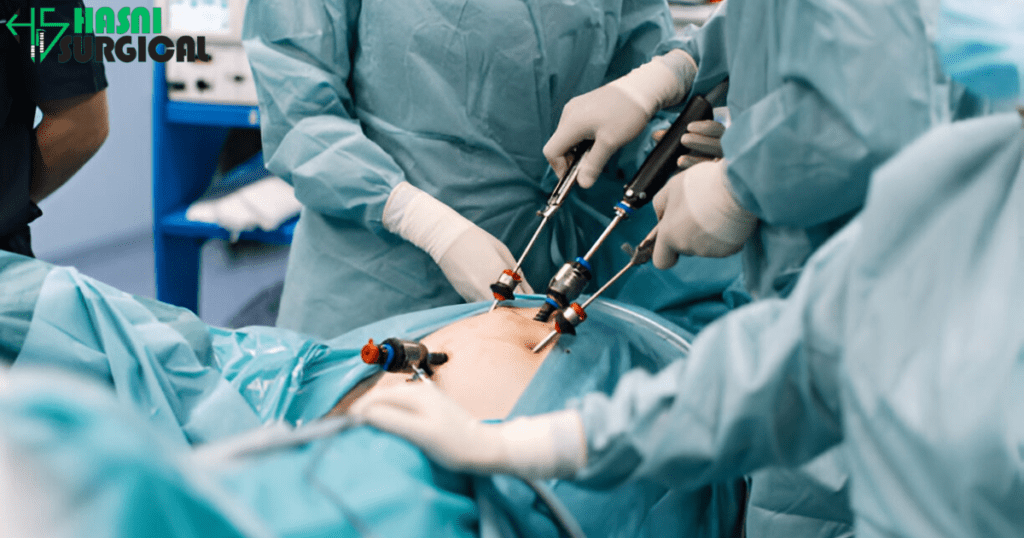
Minimally invasive surgery (MIS) techniques, including laparoscopy and endoscopy, make use of specific instruments to achieve the desired task through very small incisions. Because the incision is small, these tools inherently reduce scarring.
Important Tools:
- Laparoscopic scissors and graspers: Dissect and manipulate with precision through small ports.
- Trocars with safety features: so that the instruments pass in and out without causing any trauma.
Relation between Scarring and Psychological Welfare
Scars are more than marks; they can symbolize deep emotional meaning. To many patients, especially those having surgeries on noticeable parts of the body, such as the face or hands, scars can represent self-consciousness and anxiety. Reducing scarring is not merely an aesthetic consideration; it involves preserving a feeling of normalcy and confidence.
Psychological Effects:
- Self-Esteem: An excellently healed scar with a minimum mark will improve the patient’s sense of self.
- Social Comfort: Less likely to have a sense of being judged and self-conscious in front of other people who could see scars on the patient.
- Recovery Experience: Successful surgeries with fewer or no visible scarring add to the patient’s satisfaction regarding the surgery.
Investment in precise surgical tools on the part of healthcare professionals significantly improves physical and emotional recovery in patients.
Conclusion: Accuracy is the Panacea for Far Better Recovery
Scarring during surgery is reduced by skill, technique, and appropriate devices. Whether it’s a sharp scalpel and fine sutures, advanced electrosurgical devices, or minimally invasive instruments, modern surgical tools concentrate on precision but minimize trauma. These innovations go beyond better healing; they also meet the patient’s satisfaction by eradicating worries about aesthetics and emotional well-being.
Improvement in the lives of others is at the heart of surgery, not only by saving their lives but by ensuring that the patients feel complete and whole as they get better. It all becomes a reality with the right tools.
