
What Surgical Tool Is Best Employed to Trim and Shape Bone? Let’s look at 5 Potential tools.
August 2, 2025 2025-08-02 5:15What Surgical Tool Is Best Employed to Trim and Shape Bone? Let’s look at 5 Potential tools.
 hasni
hasni 
What Surgical Tool Is Best Employed to Trim and Shape Bone? Let’s look at 5 Potential tools.
For orthopedic and other surgeries involving the skeletal system, control and precision are paramount. Whether orthopedic surgery, neurosurgery, dental implants, reconstructive surgery, or any surgery, the capacity to trim, contour, or shape bone is what can determine the success of a procedure versus complications. So what tools do surgeons use for this vital purpose?
This in-depth guide delves into the surgical tools utilized to cut and fashion bone, going deep into the types, uses, and considerations of how to select proper tools for various surgical purposes.
Why Do Surgeons Cut or Reshape Bone?
Surgeons will be required to cut or reshape bone for several reasons. These include:
Orthopedic surgery: Bone will need to be resected, realigned, or resurfaced to carry out joint replacements and reductions of fractures.
Dental and maxillofacial surgery: Bone is reshaped in a bid to place implants or reconstruct the jaw.
Neurosurgery: Accessing the brain involves the removal or thinning of parts of the skull in certain instances.
Plastic and reconstructive surgery: Bone is reshaped to attain symmetry or function.
Veterinary surgery: In orthopedic or dental surgery of small and large animals, bone trimming is equally important.
Throughout all these cases, proper cutting, reshaping, or removing bone tissue is a core procedure, performed using specialized surgery tools.
Categories of Surgical Tools Used for Trimming and Shaping Bone
No one universal instrument is employed to trim bone, but rather multiple types of instruments are utilized based on the surgical site, location, and type of bone tissue being treated. These include:
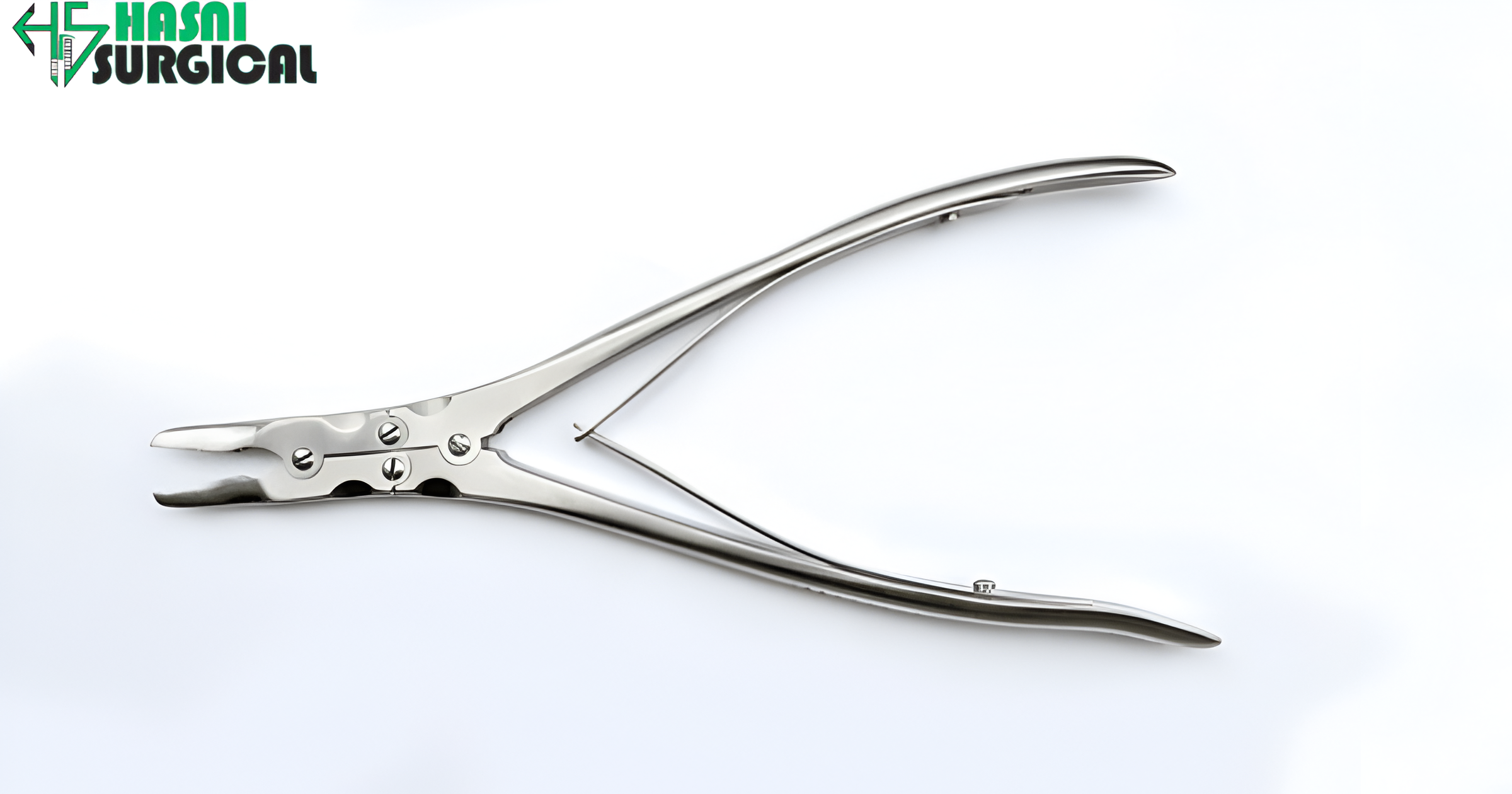
1. Rongeurs
What They Are:
Rongeurs are robust, spring-loaded plier-style instruments featuring sharp-edged, scoop-tipped ends for biting off and eliminating bone or hard tissue.
Common Uses:
- Resection of small bone spicules
- Trimming bone edges
- Spinal procedures (e.g., Kerrison Rongeur)
- Orthopedic debridement
Advantages:
- Precise control
- Minimal bone dust generation
- Application in tight or limited spaces
Types:
- Kerrison Rongeur (applicable in spine and neurosurgery)
- Leksell Rongeur (heavy-duty applications)
- Double-action Rongeur (for more cutting force)

2. Bone Cutters and Bone Shears
What They Do:
Bone shears and bone cutters are scissor-type handheld surgical instruments that are employed to trim or cut small to medium-sized bones with clean straight cuts.
Where They Are Used:
- Orthopedic surgery
- Removal of ribs
- Veterinary surgery
- Oral/maxillofacial surgery
Examples:
- Liston Bone Cutter
- Stille-Luer Bone Cutter
- Pin and Wire Cutters (which cannot be used independent of surgical pins)
Benefits:
- Easy to use
- Less trauma with clean cuts
- Most ideally suited for cutting or shortening bone

3. Osteotomes and Chisels
What They Are:
Flat, beveled instruments that are hit with a surgical mallet to accurately chip, shape, or split bone.
Common Uses:
- Orthopedic alignment
- Bone graft harvesting
- Shaping bone in plastic or maxillofacial surgery
Features:
- Beveled edge for controlled cutting
- Straight or curved forms for ease of maneuverability
Differences:
- Osteotome: beveled on both sides (for splitting)
- Chisel: beveled on one side (for carving/shaping)
Examples:
- Lambotte Osteotome
- Hoke Chisel
- Lucae Chisel (used in ENT)
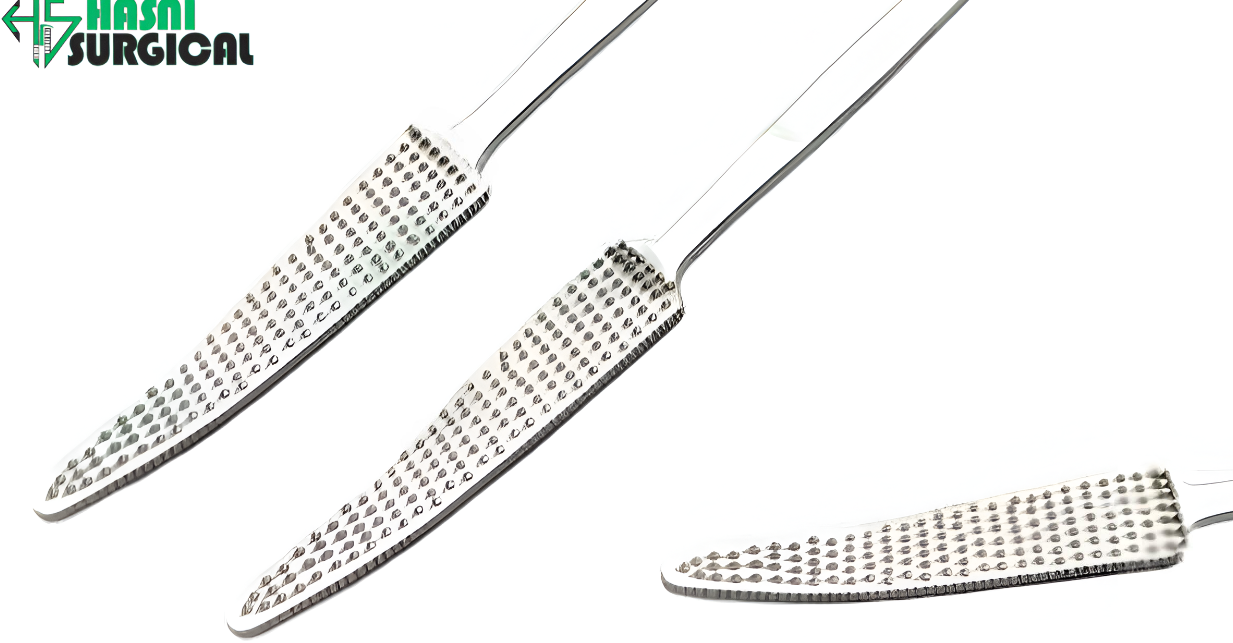
4. Rasps and Files
What They Are:
Bone rasps and files are manual hand instruments applied to smooth, contour, or polish bone surfaces.
Common Uses:
- Resecting sharp bone edges
- Shaping bone following trimming
- Joint operations
- Plastic and dental treatments
Benefits:
- Fine control
- No power required
- Applied in terminal stages of shaping
Examples:
- Friedman Rasp (orthopedic)
- Nail Rasp (employed in nail operations)
- Hibbs Rasp (employed on larger bones)

5. Powered Instruments (Oscillating and Reciprocating Saws)
What They Are:
High-speed rotary or reciprocating blades on power instruments that effectively cut and trim bone, particularly during large procedures.
Common Uses:
- Total knee and hip replacements
- Craniotomies
- Amputations
- Orthopedic surgery in veterinary medicine
Advantages:
- Faster and more accurate
- Reduced hand fatigue
- Angulated and controlled depth
Types:
- Oscillating saws (blade oscillates side to side)
- Reciprocating saws (blade reciprocates from side to side)
- Sagittal saws
- Drill and burr systems for shaping
Common Surgery Procedures Involving Bone Trimming Instruments
1. Total Knee Replacement (TKR)
- Instruments: Oscillating saws, bone files, measuring jigs
- Purpose: Resect tibia and femur for implant placement
2. Spinal Decompression Surgery
- Instruments: Kerrison Rongeurs, curettes, drills
- Purpose: Excise bone compressing nerves (laminectomy)
3. Dental Implant Surgery
- Instruments: Osteotomes, rasps, rotary burrs
- Purpose: Contour jawbone for seating implant
4. Craniotomy
- Instruments: Craniotome (powered), rongeurs
- Purpose: Remove part of skull to access brain
5. Veterinary Orthopedic Surgery
- Instruments: Gigli saws, Liston cutters, rasps
- Purpose: To heal fractures or amputations in animals
Maintenance and Care of Bone-Trimming Instruments
Because these instruments come in contact with hard, dense tissue, wear and tear cannot be avoided. Maintenance yields function and patient safety.
Tips:
- Sterilize exactly to prevent corrosion or contamination
- Regularly check edges for dullness or chips
- Sharpen cutting edges or replace worn-out equipment
- Lubricate working parts (in rongeurs and cutters)
- Use proper instrument for intended bone size and density
Innovations and Modern Equipment
While technology continues to enhance robot-assisted surgery, 3D-printed guides, and laser bone sculpting, the world of trimming tools for bones is evolving. Yet most traditional tools like rongeurs, chisels, and rasps are still central since they are uncomplicated and involve sensory feedback.
Battery-powered surgical systems with interchangeable attachments also enable surgeons to alternate between cutting, drilling, and shaping using one set of tools.
Final Thoughts
There is no one answer to the question “What surgical instrument is used to trim and shape bone?”—because the answer depends on the kind of bone, the surgical specialty, and the purpose of the procedure. But the most commonly employed are:
Rongeurs—for biting and trimming bone
Bone cutters—for straight, clean cuts
Osteotomes and chisels—for splitting and shaping
Rasps and files—for contouring
Powered saws and drills—for fast, precise trimming
Learning these instruments—and how to apply them correctly—is crucial for initiating successful surgical operations. Whether you are a student learning surgery basics, a surgeon weighing new equipment, or a distributor educating customers, knowing the correct instrument to use for trimming bones can be a factor in patient care and surgical precision.
About Us
At Hasni Surgical, we produce and distribute high-precision surgical instruments, such as bone saws, rongeurs, cutters, osteotomes, and powered surgical instruments—relied on worldwide by orthopedic, dental, neurosurgery, and veterinary surgeons.
With a tradition of craftsmanship dating back to 1986, we blend traditional quality with innovation.
Need custom instruments or OEM solutions?
Contact us today at www.hasnisurgical.com to browse our line.
